 en
en
 Italian
  Spanish
  Hungarian
  Thai
Thai  Japanese
  Portuguese
  Malay
Malay  Russian
  French
  German
  Arabic
  Indonesian
Why Does Flat Pack Container Shipping Efficiency Matter for Large Projects?
For a small order, the difference between loading eight or eighteen Flat Pack Container sets into a 40HQ container may not attract much attention. Once the order reaches dozens or hundreds of units, the calculation changes completely.
International shipping is not simply a freight charge added to the product price. Every container moving through a project creates a chain of work: booking, documentation, port handling, inland transportation, unloading, temporary storage and delivery coordination. The number of containers involved can therefore affect both the logistics budget and the way a project is organized.
For contractors purchasing Flat Pack Containers in volume, the number of sets that can be loaded into each 40HQ container can have a direct effect on the overall logistics plan.
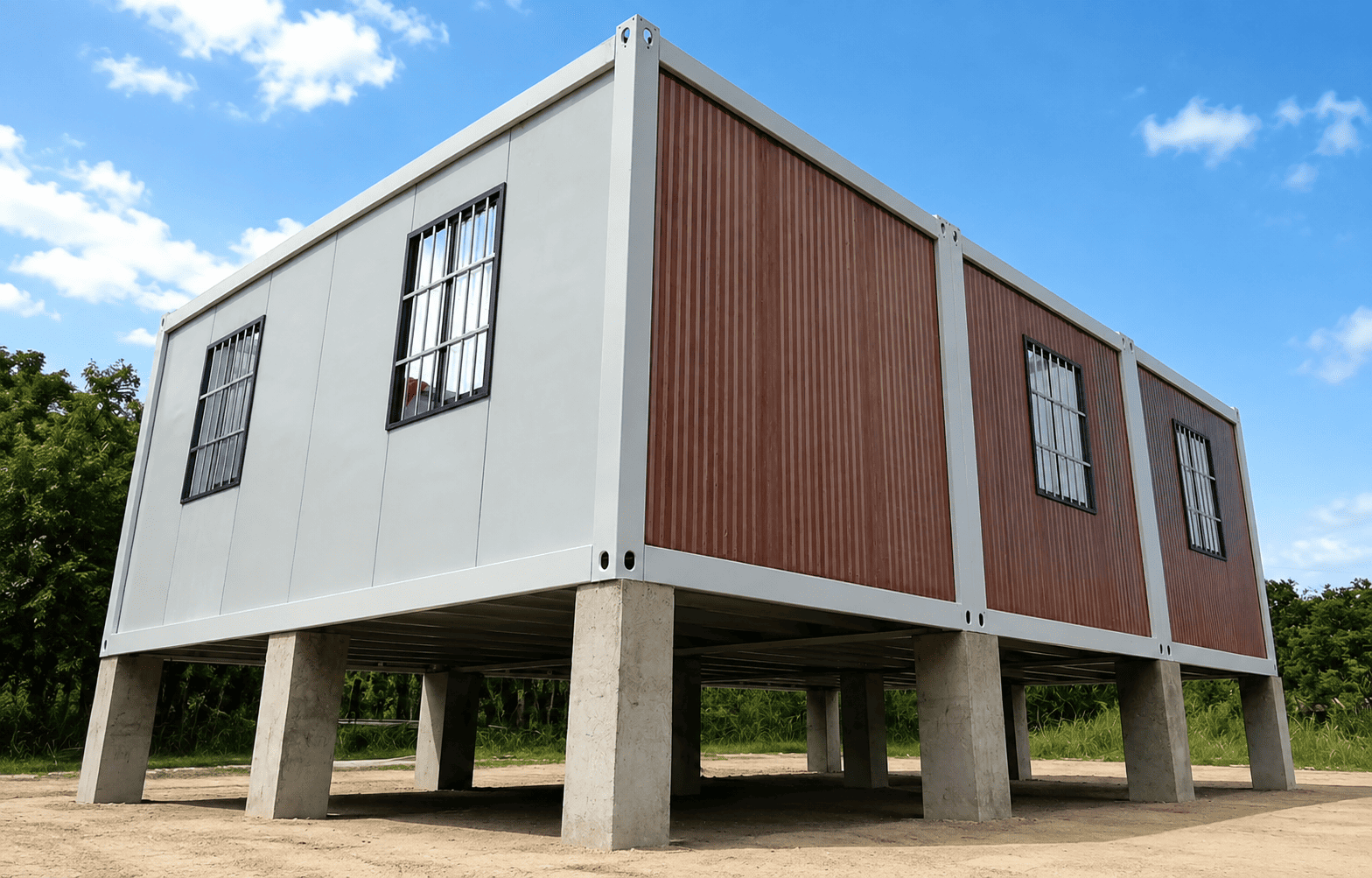
Casa Box's Detachable Flat Pack Container can load up to 18 sets in one 40HQ shipping container for suitable configurations. Traditional Flat Pack Container designs may load around 8 sets per 40HQ. The difference looks like a shipping figure on paper, but its impact becomes much more tangible when the project quantity increases.
Shipping Capacity Starts With the Building Design
Transport performance is partly decided at the factory.
The dimensions of structural components, the way they connect, how much of the building can be separated, and how those components are stacked all influence the final loading arrangement.
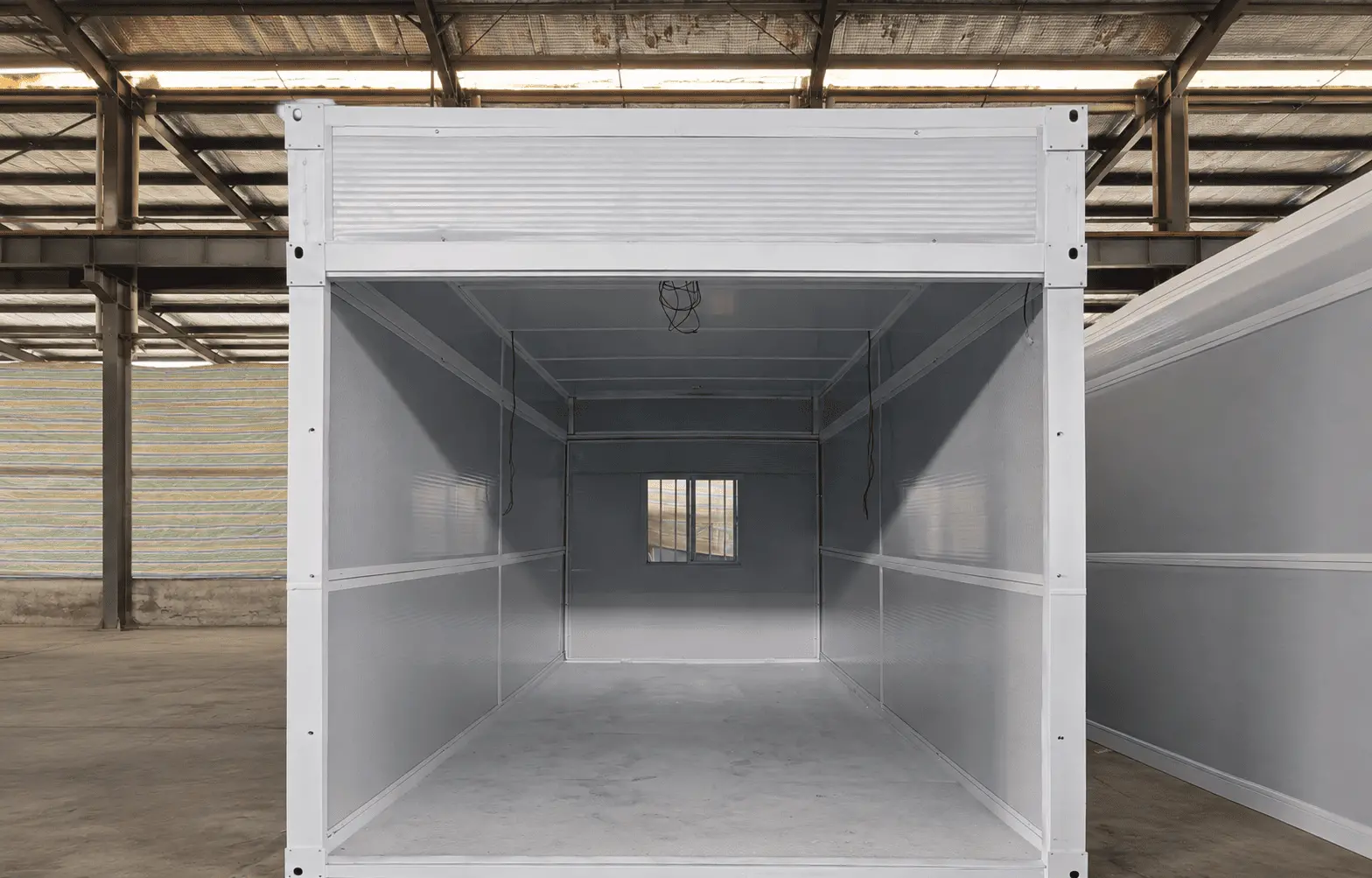
That is particularly important for modular buildings because the finished structure occupies much more space than its individual components. Frames, roof sections, wall panels, doors, windows and other parts have to be transported separately and protected against movement and damage during the journey.
A detachable structure gives the manufacturer more freedom to arrange those components efficiently.
The objective is not simply to fill every empty space inside a shipping container. Components still need to be protected, accessible and properly organized for unloading and installation. Excessive compression or an inconvenient packing sequence can create problems later at the jobsite.
Good logistics design sits somewhere between the two: high container utilization without making installation unnecessarily difficult.
What Does 18 Sets per 40HQ Actually Mean?
Consider a project that requires 144 sets.
With a loading capacity of around 8 sets per 40HQ, the basic calculation comes to:
144 ÷ 8 = 18 containers
At a loading capacity of up to 18 sets per 40HQ:
144 ÷ 18 = 8 containers
The actual number can vary according to the selected configuration, accessories and packing arrangement, but the difference in scale is clear.
Eight containers and eighteen containers do not create the same logistics workload.
The project may require fewer shipping bookings, fewer port-handling operations, fewer inland deliveries and fewer unloading activities. Temporary storage requirements may also become easier to manage when fewer containers arrive at the site.
Not every reduction translates directly into a specific percentage of cost savings. Ocean freight, customs charges, trucking rates and port fees vary between routes and destinations. The value of higher loading efficiency is better understood as a reduction in the number of logistics movements that the project has to plan and manage.
For a large project, that difference matters.
Why Container Numbers Matter at the Jobsite
The impact becomes even more noticeable when the project is located away from a major port.
Imagine a construction camp located several hours from the nearest port city. Every shipping container needs to leave the port, travel to the project area, enter the site, be unloaded and then have the empty container handled according to the logistics arrangement.
If the project requires 100 containers instead of 50, the difference is not limited to ocean freight.
The project team may need:
· More truck trips
· More delivery slots
· More unloading operations
· More temporary storage capacity
· More coordination between logistics and construction teams
· More opportunities for delivery delays
On a busy construction site, these details can become surprisingly difficult to manage.
A delivery arriving at the wrong time can interfere with lifting operations. Components delivered too early may occupy valuable storage space. Several trucks arriving together may create congestion when the site has only one suitable unloading area.
For large modular projects, shipping efficiency can therefore influence the workflow of the site, not just the procurement budget.
Large Projects Magnify Small Design Differences
A difference of one or two sets per container may seem insignificant when looking at a single shipment.
Large quantities change the calculation.
Suppose a contractor needs 300 units. If the loading capacity is around 8 sets per 40HQ, the project could require approximately 38 containers based on simple quantity division. At 18 sets per 40HQ, the theoretical requirement falls to approximately 17 containers.
Actual loading quantities can vary according to the selected configuration and packing arrangement, so these figures should be treated as a comparison rather than a final shipping quotation.
Still, the scale of the difference is clear.
When the unit count becomes large, container utilization becomes part of the project economics.
The same principle applies to construction camps, temporary office compounds, worker accommodation and other modular projects where a large number of similar units have to reach one destination.
Shipping and Installation Should Be Planned Together
There is a common mistake in modular logistics: optimizing the packing arrangement without considering what happens after delivery.
The factory may achieve an impressive loading quantity, but the installation team could then receive packages that are difficult to identify or inconvenient to handle.
That creates another kind of cost.
Installers may spend additional time sorting components. A misplaced connection component can delay an entire installation sequence. Roof and wall elements may need to be moved several times before they reach the correct location.
A better packing strategy considers the installation process from the beginning.
Components should be:
· Grouped in a logical way
· Protected against transport damage
· Identifiable after unloading
· Organized around the installation sequence where possible
· Packed without creating unnecessary handling work
For a detachable building system, this coordination becomes especially important because the structure arrives as a collection of components rather than as a largely assembled unit.
The building is designed to come apart into components for transportation. Those same components need to come back together efficiently at the destination.
Why the 40HQ Container Should Be Considered Early
For an export project, shipping should not be left until the end of procurement.
A better approach is to calculate the loading plan while the product and quantity are being finalized.
A project manager may want to confirm:
· How many complete sets fit into one 40HQ?
· Is the quoted loading quantity based on the actual project configuration?
· Are additional components packed separately?
· How are roof and wall components arranged?
· Are furniture or interior fittings included?
· Does the loading plan change for different layouts?
· How many containers are required for the complete project?
These questions can reveal hidden logistics differences between two products that appear similar on a quotation sheet.
Fewer Containers Can Simplify Site Coordination
Shipping efficiency has another practical effect when the project site has limited room.
A construction camp may already need space for materials, equipment, vehicles and workers. Temporary storage areas are rarely unlimited.
Receiving a large number of containers over a short period can create congestion.
With a more efficient loading arrangement, the delivery schedule may be easier to coordinate with the installation program. Shipments can be planned around construction progress rather than simply moving as many containers as possible to the site.
The goal is not to deliver everything as quickly as possible. The goal is to have the right materials arrive when the site is ready to use them.
Shipping Efficiency Is Also About Risk
Cost is only one side of the calculation.
Every additional shipment creates another opportunity for something to go wrong:
· Vessel schedule changes
· Port congestion
· Customs delays
· Truck availability
· Weather disruptions
· Site access problems
· Damaged components
· Storage issues
No packing method can eliminate these risks. Reducing the number of individual container movements, however, can reduce the number of logistical events that have to be coordinated.
That can make a complex project easier to control.
For an EPC contractor or construction company managing several suppliers at the same time, this operational simplicity can be just as valuable as the direct freight saving.
What Should Buyers Ask Before Comparing Loading Capacity?
Shipping claims should always be examined in the context of the actual project.
A buyer should confirm at least the following:
Question | Why It Matters |
How many sets fit in one 40HQ? | Determines the approximate container requirement |
Is the loading figure based on my configuration? | Prevents unrealistic shipping calculations |
How are components packed? | Affects unloading and installation |
Are all structural components detachable? | Influences packing flexibility |
Are components protected during transit? | Reduces the risk of damage |
Can packing be coordinated with installation? | Makes site assembly easier |
Can the supplier provide a loading plan? | Helps logistics planning |
A reliable supplier should be able to explain not only how many sets fit into a container, but why they fit and what that packing arrangement means for the project.
Two suppliers may quote similar prices for what appears to be a similar building. Once shipping requirements are added, the overall project cost and logistics workload can look quite different.
When Shipping Efficiency Becomes a Procurement Priority
Shipping efficiency deserves particular attention when:
· The project involves a large number of units
· The destination is far from the manufacturing plant
· Inland transportation is expensive
· The project site has limited storage space
· Construction needs to proceed in planned delivery phases
· Port or trucking capacity is limited
· The building will be exported internationally
For a small order, product price may dominate the decision. For a large project, the relationship between product design and logistics becomes much more visible.
A Flat Pack Container is ultimately a building system that has to travel before it can be used. Good design should account for that journey.
Casa Box's Detachable Flat Pack Container is designed around this principle, with loading capacity of up to 18 sets per 40HQ for suitable configurations. The purpose is not simply to achieve a larger loading number. The underlying goal is to reduce the logistics burden created by large-volume modular building projects while keeping the components organized for installation at the destination.
For detailed loading arrangements, component configurations and project-specific shipping requirements, please contact the Casa Box sales team.
Content Center
Container house news, guides and project insights.