 en
en
 Italian
  Spanish
  Hungarian
  Thai
Thai  Japanese
  Portuguese
  Malay
Malay  Russian
  French
  German
  Arabic
  Indonesian
How Fast Can a Foldable Container House Be Deployed on Site?
For a temporary building project, delivery is only the beginning. The units still need to be unloaded, positioned and turned into usable space before workers can move in or site teams can start using the facility.
That period can become a serious issue when a project involves dozens of buildings.
A remote construction camp, emergency housing project or temporary workforce facility may have limited equipment, a tight construction schedule and little spare space for storing materials. Bringing a building to the site is one task; getting it ready for use is another.
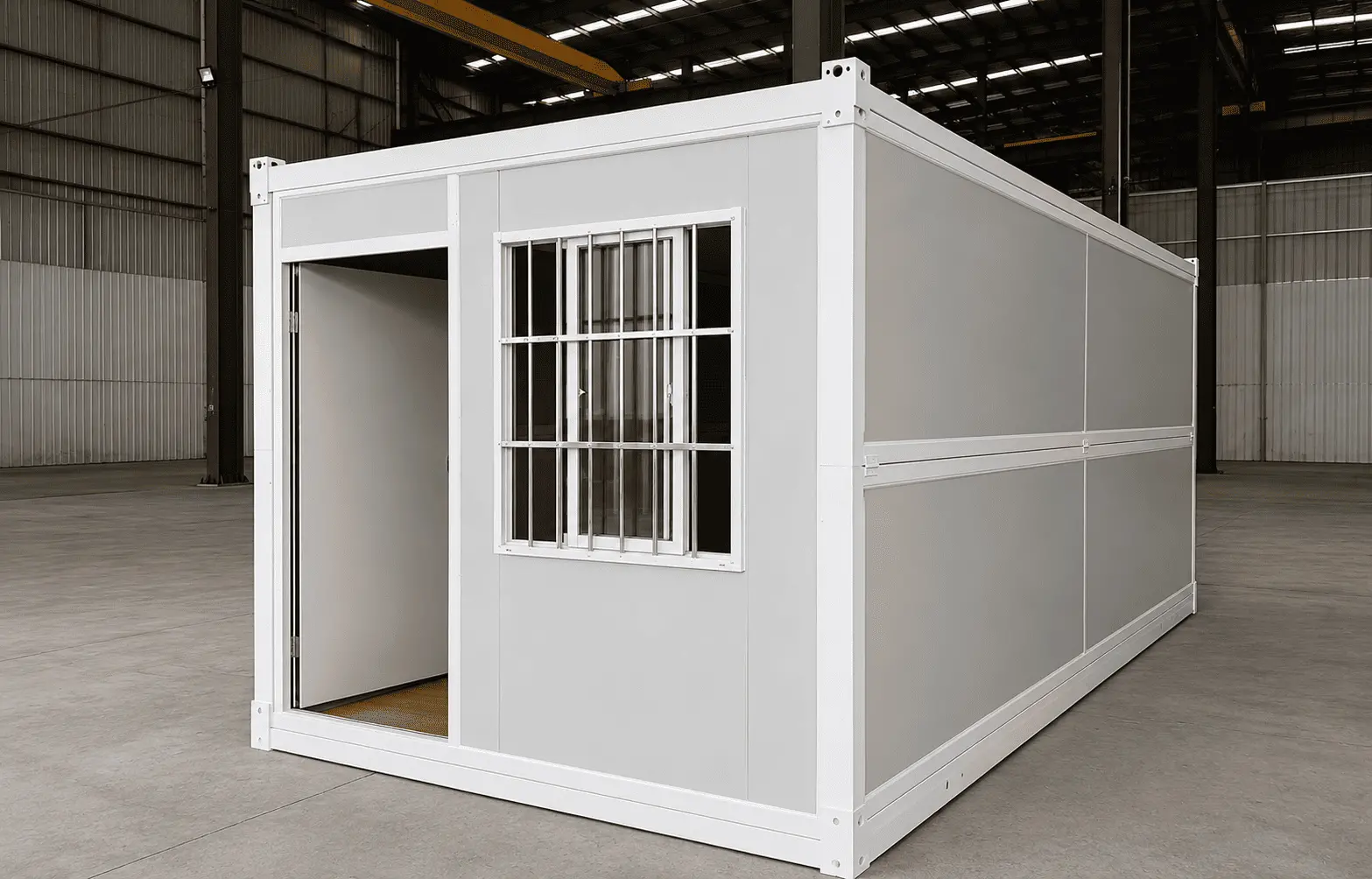
The X-type Foldable Container House approaches this part of the project differently. Its folding structure allows the unit to arrive in a compact transport condition and be opened on site with lifting equipment. Under suitable site conditions, the folding and deployment process can be completed in around 10 minutes.
The number should not be interpreted as the total time required to put a finished building into operation. Site preparation, unloading, crane positioning, utility connections and interior fit-out are separate activities. The value of a quick deployment system comes from shortening the part of the process that turns the transported structure into an actual building.
Where Does Installation Time Usually Go?
A modular building project involves several separate operations.
Before a unit can be deployed, the site needs a suitable foundation or supporting surface. Transport vehicles need access to the unloading area, and lifting equipment needs enough working space.
Once the unit arrives, the typical sequence may include:
1. Unloading the folded unit
2. Moving it to the planned position
3. Lifting or positioning it with suitable equipment
4. Opening the folding structure
5. Checking the main connections and building condition
6. Completing utilities and interior work where required
The time required for each stage depends on the project.
A site with clear access and prepared foundations will naturally move faster than one where the ground still needs work. Weather, crane availability, unit configuration and the number of workers on site can also affect the schedule.
For that reason, a supplier's stated deployment time should be understood as part of the installation process rather than the duration of the entire project.
What Makes the X-type Deployment Different?
The main difference comes from the way the building is transported and stored before installation.
Instead of shipping a fully expanded building, the X-type Foldable Container House arrives in a folded condition. The structural components are already integrated into the unit, so the site team is not starting with a pile of separate wall and frame components that need to be assembled one by one.
Once the unit is correctly positioned, the folding mechanism allows the structure to open into its working form.
Casa Box specifies a deployment time of approximately 10 minutes under suitable conditions.
That approach can be particularly useful when a project requires many units. Repeating a relatively straightforward deployment process across a large number of buildings can be easier to schedule than carrying out extensive assembly work on every individual unit.
Ten Minutes Does Not Mean the Entire Building Is Finished
This distinction is important for project planning.
A foldable container house can be deployed quickly, but the building may still require additional work before it is ready for occupancy.
Electrical connections, water supply, drainage, air conditioning, furniture, sanitary equipment and other interior fit-out requirements depend on the project configuration.
For example, a basic storage unit may require relatively little work after deployment. A worker accommodation unit with bathrooms, electrical systems and furniture will naturally involve more preparation.
The same applies to a site office.
The structure may be opened quickly, but desks, lighting, network connections, power distribution and other office facilities still need to be arranged.
A realistic project schedule should therefore separate structural deployment time from final commissioning time.
Site Preparation Has a Direct Effect on Speed
A fast building system cannot compensate for an unprepared site.
The ground needs to be suitable for the intended building arrangement. Supporting points should be positioned correctly, and the access route should allow the transport vehicle and lifting equipment to reach the installation area.
For projects using multiple X-type units, the layout should ideally be established before delivery.
That includes:
· Unit positions
· Access routes
· Crane working areas
· Foundation or support locations
· Electrical and water connection points
· Drainage arrangements
· Stacking areas where applicable
A few hours spent planning these details before the shipment arrives can prevent much longer delays during installation.
This becomes even more important for remote construction sites, where bringing additional equipment or correcting a poorly planned installation area may take considerably more time than it would in an urban location.
Crane Access Should Be Planned Before Delivery
The X-type system uses lifting equipment during deployment, so crane access needs to be part of the site plan.
The required lifting arrangement depends on the unit configuration, site conditions and project method statement.
There needs to be enough clearance around the installation area for the equipment to operate safely. Overhead obstacles, narrow access roads, unstable ground and nearby structures can all affect the lifting operation.
The location of the crane also matters when multiple units are being deployed.
A project team may be able to reduce unnecessary movement by planning the unloading and deployment sequence around the final building layout.
For large workforce camps, this can turn into a logistics exercise rather than simply an installation task.
Repetition Makes Speed More Valuable on Large Projects
The difference between a fast and slow installation process may not be significant for one building.
The calculation changes when the project involves 50, 100 or more units.
Suppose a workforce camp requires 100 accommodation units. Every additional operation required for each unit will be repeated across the project.
A system that reduces the amount of structural assembly required on site can therefore have a different impact on labor planning, equipment scheduling and project coordination.
The benefit is not simply that each individual unit can be deployed quickly.
The larger advantage comes from creating a repeatable installation process.
Once the site team understands the lifting sequence, positioning requirements and deployment procedure, the same workflow can be applied to the remaining units, subject to the project's specific conditions.
Transport and Installation Need to Be Planned Together
A common mistake is to treat transportation and installation as two separate stages.
For a portable foldable container house, the way units are packed and delivered directly affects what happens after they reach the site.
Casa Box's X-type design can load up to 14 complete units in one 40HC container for specified configurations.
For a large project, that means the shipment plan can be organized around batches of units rather than treating every building as an individual delivery.
The project team can coordinate:
Factory → 40HC loading → Port → Inland transport → Site unloading → Deployment
Each stage has to connect with the next.
If 14 units arrive but the site is only prepared for five, the remaining units may need temporary storage. If the crane is booked for one day but the delivery is delayed, the installation schedule may also be affected.
Transport efficiency only creates its full value when the site is ready to receive the shipment.
What About Two-Level Installation?
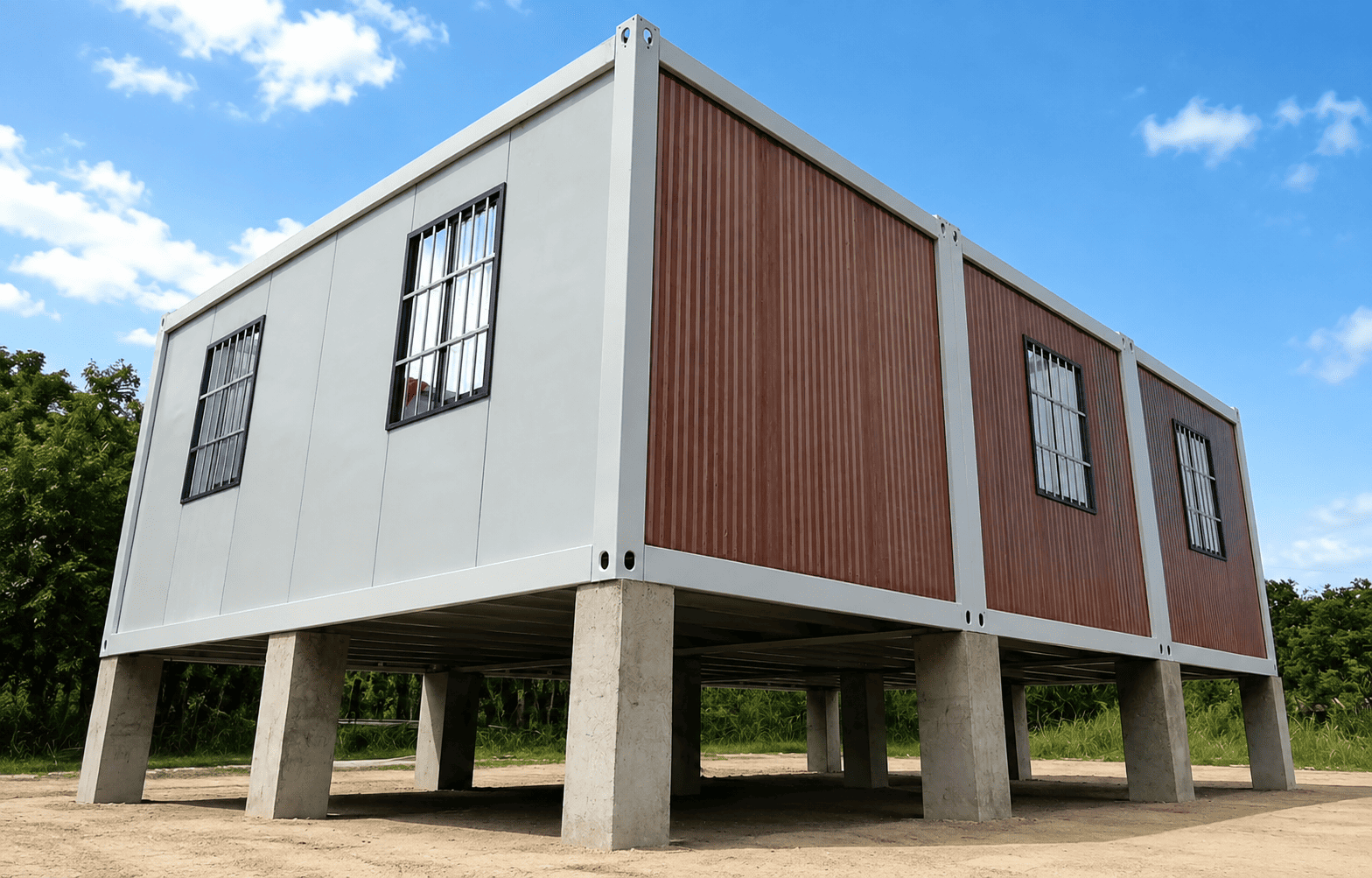
The X-type system can also be used in suitable stackable configurations.
For projects with limited land, two-level arrangements can provide more usable floor area without spreading every facility across the ground.
The installation process becomes more demanding in this situation.
Structural loading, access, stairs, lifting operations and local building requirements all need to be considered before the units are delivered.
The order of installation can also affect site efficiency. Ground-level units, upper-level units and access structures need to be coordinated as part of the overall construction sequence.
A quick folding mechanism helps reduce structural deployment time, but it does not remove the engineering work required for a multi-level facility.
Weather Can Change the Installation Schedule
Even with a fast deployment system, outdoor construction remains affected by weather.
Strong wind can restrict lifting operations. Heavy rain can make ground conditions unsuitable for some equipment. Extreme weather can also affect worker safety and the ability to position units accurately.
For projects in tropical or coastal regions, the installation plan should include realistic weather allowances.
This is one reason a short deployment process can be valuable. When suitable weather conditions are available, the project team can make better use of the installation window instead of spending most of that time assembling the building.
Quick Deployment Does Not Remove Quality Checks
Speed should never replace inspection.
After a foldable container house has been opened, the site team should check the structure and relevant connections before the unit is put into service.
Areas worth checking include:
· Main frame condition
· Folding components
· Structural connections
· Wall panels
· Doors and windows
· P-type sealing areas
· Roof condition
· Utility connections
· General alignment
For the X-type model, the integrated P-type seals form part of the building's weather protection system. Their condition and correct positioning should be checked after deployment.
The reinforced walkable roof should also be inspected before maintenance personnel use it for access.
These checks are not an unnecessary addition to a fast installation process. They are part of making sure the building has been deployed correctly.
A Fast Installation System Still Needs a Good Workflow
The fastest projects are not necessarily those with the fastest product alone.
Site preparation, delivery timing, equipment availability and crew coordination all influence the final result.
A practical installation plan can be divided into several stages:
Before Delivery
Confirm foundations, access roads, unloading areas, crane positions and utility routes.
During Delivery
Organize the shipment sequence so units arrive according to the site's ability to receive them.
During Deployment
Position each unit accurately and follow the required folding and lifting procedure.
After Deployment
Inspect the structure, complete services and prepare the interior for its intended use.
This workflow helps prevent a common situation in modular projects: the building arrives quickly but then waits on site because the next stage has not been prepared.
Which Projects Benefit Most From Fast Deployment?
Not every modular building project has the same need for rapid installation.
The advantage becomes more noticeable when there is pressure on time, labor or site access.
Construction camps may need accommodation and offices ready while the main project is already moving forward.
Emergency housing projects may have a narrow window between delivery and occupancy.
Remote mining and energy projects may face higher labor and equipment costs for on-site construction.
Mobile workforce projects may need buildings that can be deployed at one location and later moved to another.
Large temporary facilities benefit from a repeatable deployment process when dozens of units are installed across one site.
In these situations, the value of a foldable system is not simply measured in minutes. The real question is how the installation method affects the entire project schedule.
Choosing a Foldable Container House Based on Real Installation Conditions
When comparing a foldable container house manufacturer or supplier, buyers should ask for more than an installation time.
Useful questions include:
· What equipment is required for deployment?
· How many workers are normally needed?
· What site preparation is required?
· What are the lifting requirements?
· How is the unit secured after deployment?
· How are utilities connected?
· What checks are required before occupancy?
· Can the same process be repeated efficiently across a large camp?
· What changes when units are stacked?
· What conditions are assumed when the supplier quotes the deployment time?
These questions make the advertised installation speed much easier to evaluate.
A ten-minute figure has value when the project team understands exactly what it represents and what needs to happen before and after it.
Where the X-type System Fits
Casa Box's X-type Foldable Container House is designed for projects where transportation, deployment and site mobility need to be considered together.
The unit can be transported in a folded state, opened on site with suitable lifting equipment and configured for applications such as workforce accommodation, construction offices, emergency housing and large temporary facilities.
The combination of rapid deployment, up to 14 units per 40HC, a 2.0mm galvanized steel frame, integrated P-type seals and stackable configurations gives project teams several factors to consider when planning a modular facility.
Fast deployment does not replace proper engineering or site preparation. It simply changes how much structural work needs to happen after the building reaches the site.
For projects where every installation day, labor movement and equipment booking affects the schedule, that difference can be significant.
For detailed deployment procedures, lifting requirements, packing arrangements and project-specific configurations, please contact the Casa Box sales team.
Content Center
Container house news, guides and project insights.