 en
en
 Italian
  Spanish
  Hungarian
  Thai
Thai  Japanese
  Portuguese
  Malay
Malay  Russian
  French
  German
  Arabic
  Indonesian
What Makes a Detachable Container House Suitable for Guyana’s Oil and Gas Projects?
Guyana's growing oil and gas sector has created demand for supporting infrastructure far beyond offshore production itself. Accommodation, site offices, dining facilities, maintenance spaces, storage areas, and other project buildings are needed to support personnel working across coastal and remote locations.
For these projects, the building solution needs to respond to more than the basic requirement for additional space. High humidity, heavy rainfall, coastal exposure, limited construction resources at remote sites, and long project cycles all influence how a modular facility should be designed and specified.
A Detachable Container House can provide a practical building system for these conditions. Its structural components can be manufactured away from the project site, transported as modular units, and assembled according to the required layout. When a project changes or a facility needs to be moved, the building can also be dismantled and reassembled.
For Guyana's oil and gas contractors, EPC companies, project operators, and accommodation providers, however, the important question is not simply whether a detachable building can be used. The more relevant question is whether its structure, enclosure, drainage, interior environment, and installation system are suitable for the conditions in which the facility will operate.
What Makes Guyana Different for Modular Building Projects?
Guyana's oil and gas development is closely connected with its coastal environment and expanding project infrastructure. Many supporting facilities are located in areas where humidity, rainfall, and exposure to the surrounding environment need to be considered during building design.
A modular facility may be used for a relatively short construction phase or remain in service throughout a longer operational period. The specification therefore needs to account for both immediate installation and continued use.
For a detachable container house supplier, this changes the way the product should be approached. The building needs to be treated as a complete system, with the structural frame, wall panels, roof, drainage, doors, windows, and internal services working together.
Humidity and Coastal Exposure
Moisture is an important consideration for buildings operating in Guyana.
When steel structures remain exposed to humid air for extended periods, corrosion protection becomes part of the building's service-life planning. This is particularly relevant for accommodation and office facilities that may remain on site for several years.
The issue extends beyond the main frame. Fasteners, joints, exposed components, drainage points, and areas where water can accumulate also require attention.
Casa Box uses galvanized steel structures for its detachable container solutions. The zinc coating provides an additional protective layer to the steel and helps reduce exposure to corrosive conditions.
For a Guyana project, the steel specification should be considered together with surface treatment, roof drainage, connection details, and the maintenance plan. A corrosion-resistant frame alone cannot compensate for poor water management elsewhere in the building.
Heavy Rainfall and Water Management
Rainfall is another factor that deserves attention when planning modular buildings in Guyana.
Water needs to be directed away from the roof and building envelope efficiently. Poor drainage can lead to water accumulation around the building, deterioration of materials, and unnecessary maintenance.
This is one reason drainage should be considered during the initial building specification rather than treated as an installation detail.
Casa Box can provide Internal Drainage within its modular building system. Keeping drainage routes integrated into the building helps reduce reliance on exposed external pipework and provides better protection for the drainage components.
The final drainage arrangement still needs to be coordinated with the project foundation and external site drainage system. Site grading, discharge points, and local engineering requirements should be confirmed before installation.
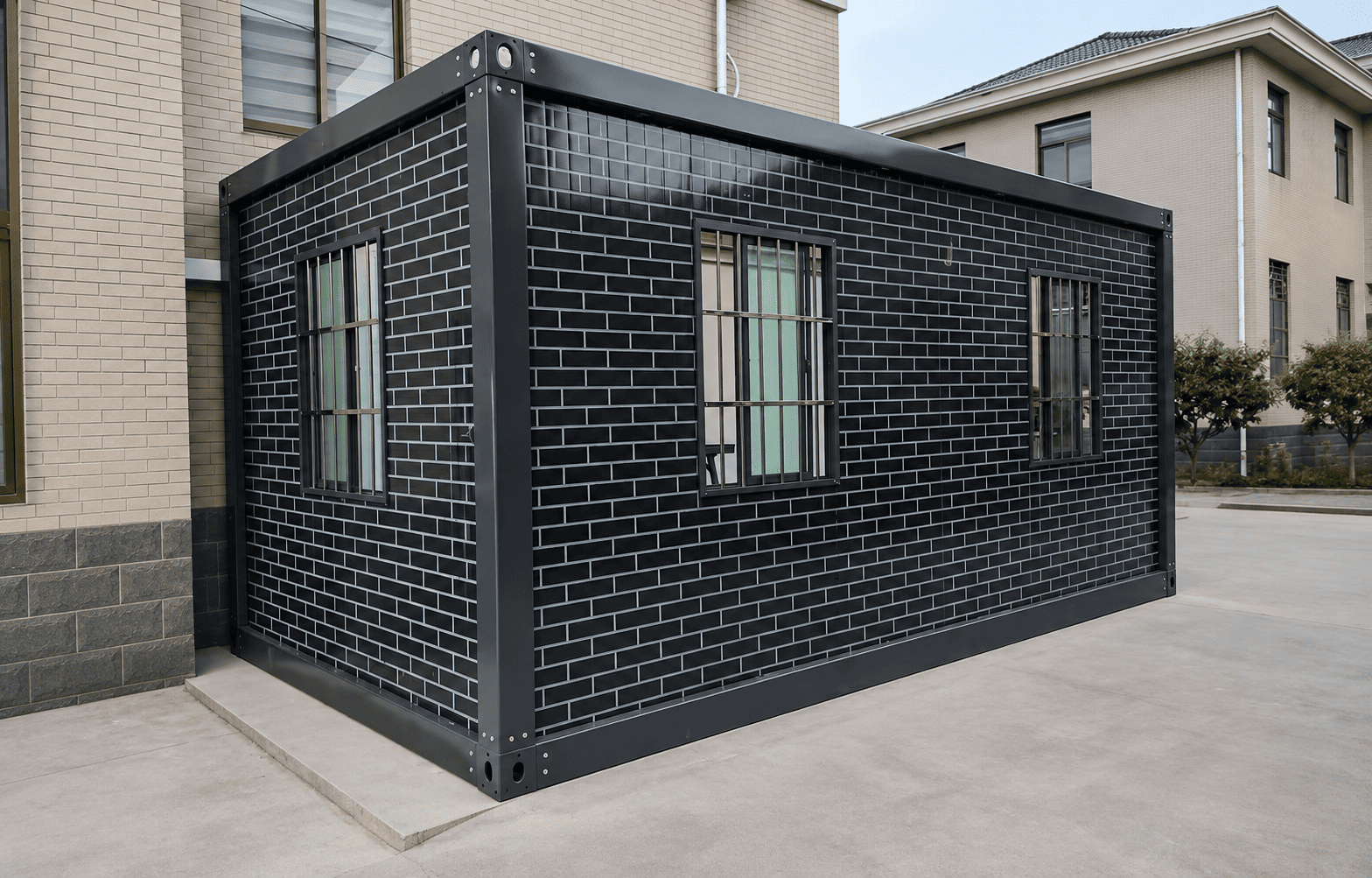
What Should an Oil and Gas Detachable Container House Provide?
An oil and gas project has different requirements from a basic construction site.
Personnel may work at the facility for extended periods, and accommodation or support buildings can operate continuously. This means the building needs to provide a suitable internal environment while remaining practical to maintain.
A worker accommodation container for an oil and gas project should therefore be assessed according to more than floor area.
Thermal insulation, fire performance, ventilation, room layout, drainage, electrical systems, and maintenance access all contribute to the overall suitability of the facility.
Thermal Comfort for Long-Term Occupancy
Guyana's warm and humid climate makes indoor thermal conditions particularly important.
Accommodation buildings with poor thermal insulation can place greater demands on mechanical cooling and may provide an uncomfortable interior environment for personnel.
Casa Box can use Rock Wool Sandwich Panels for applications requiring thermal insulation and fire-resistant properties.
The insulation specification can be considered together with the building's ventilation and air-conditioning system. For accommodation projects, the objective is not simply to add an insulation layer but to establish an enclosure system that works with the rest of the building.
This becomes increasingly important when a project includes a large number of accommodation units. Small differences in building performance can become significant across an entire camp.
Fire Performance in Oil and Gas Facilities
Fire safety requires particular attention in oil and gas environments.
Accommodation buildings may be located near operational areas, workshops, storage facilities, or other project infrastructure. The building specification should therefore take account of the required fire performance of wall and roof systems, internal finishes, electrical installations, escape routes, and separation between different functional areas.
Rock Wool Sandwich Panels can be incorporated where enhanced fire performance is required.
The final fire protection arrangement should always follow the project's engineering requirements and applicable local standards. A modular building manufacturer should provide the relevant material and system information so that the building can be incorporated into the project's overall fire-safety design.
How Casa Box Approaches Detachable Container Houses for Guyana
The suitability of a modular building depends heavily on how the manufacturer connects individual product components into a complete system.
For Guyana's oil and gas projects, Casa Box focuses on structural durability, environmental protection, practical installation, and configuration based on project use.
Structural Protection Starts with the Frame
The structural frame carries the building loads and provides the foundation for the wall, roof, and internal systems.
Casa Box uses galvanized steel for its detachable container structures, providing additional protection in humid and coastal environments.
For projects in Guyana, this can be particularly relevant when buildings are expected to remain on site for an extended period.
However, structural protection needs to be considered as part of the complete building system. Roof detailing, joints, fasteners, drainage, and maintenance access all contribute to long-term performance.
Bolt Connections Support Project Changes
Oil and gas projects can change as development moves from one phase to another.
A site may initially require a small number of offices and accommodation units, followed by a larger camp as personnel requirements increase. Later, some facilities may need to be reorganized or transferred to another project.
Casa Box's bolt-connected structural system supports this type of modular management.
The connection method allows the building to be assembled without permanent site welding and provides a practical basis for future dismantling.
For project operators, this means the building can be considered as an asset that may have more than one location or configuration during its service life.
Factory Production Reduces Site Fabrication
Remote project sites do not always provide the same construction resources available in major cities.
Factory production allows major building components to be manufactured and prepared before they reach the final project location.
This shifts a significant portion of fabrication work away from the site and allows the installation team to focus on assembly and system coordination.
For Guyana projects, the benefit is particularly relevant when site access, skilled labor availability, or construction space is limited.
The factory stage can also provide better control over component dimensions and production consistency when multiple units are required for a larger accommodation or support facility.
A Building Specification Should Follow the Guyana Project, Not the Other Way Around
There is no single Detachable Container House specification that is automatically suitable for every Guyana project.
An accommodation camp near the coast, a temporary office supporting an infrastructure project, and a technical facility serving an oil and gas operation can have very different requirements.
Project Condition | Main Requirement | Relevant Building Consideration |
Coastal and humid location | Corrosion control | Galvanized steel and protected connections |
High occupancy accommodation | Indoor comfort | Thermal insulation, ventilation, and suitable room layout |
Heavy rainfall | Water management | Integrated drainage and appropriate roof design |
Remote project site | Practical installation | Factory-produced components and coordinated assembly |
Long-term project use | Durability | Structural protection and maintainable building systems |
Changing project requirements | Adaptability | Bolt-connected structure and modular configuration |
This project-based approach is important when working with an international detachable container house manufacturer.
Before production begins, the supplier needs to understand where the building will be installed, how many people will use it, how long it is expected to remain in operation, and whether the facility may be expanded or relocated later.
Where Detachable Container Houses Can Support Guyana’s Oil and Gas Projects
The strongest application for these buildings is not limited to worker bedrooms. A properly planned modular facility can support several parts of a project operation.
Worker Accommodation Camps
Accommodation is one of the most important applications.
A modular camp can combine sleeping rooms with sanitary facilities, dining areas, recreation spaces, and administrative functions.
For projects with changing workforce numbers, additional units can be incorporated into the overall camp plan when required.
The layout also needs to consider circulation, fire escape routes, ventilation, service access, and the separation of different functions.
Site and Project Offices
Oil and gas projects require spaces for project managers, engineers, supervisors, contractors, and administrative teams.
A modular container building can provide dedicated offices and meeting spaces without committing the project to conventional permanent construction at an early stage.
Office modules can also be combined with accommodation and service buildings to create a more complete project facility.
Remote Support Facilities
Remote projects may require workshops, storage areas, technical rooms, changing facilities, and other support spaces.
These facilities can be developed as part of a modular site plan, allowing different functions to be separated while maintaining a coordinated building system.
This is particularly useful when the project site has limited space for conventional construction.
Temporary Project Infrastructure
Some oil and gas facilities are required only during specific project phases.
Exploration support, construction activities, commissioning, maintenance, and expansion projects can all create temporary requirements for additional buildings.
A detachable structure gives contractors another option when the facility is expected to have a defined project life.
What Should Guyana Buyers Consider Before Ordering?
A product catalogue alone cannot determine whether a detachable building is suitable for an oil and gas project.
The first step should be to define the project's actual operating conditions.
Procurement Factor | Information to Confirm |
Location | Coastal, inland, remote, or near an existing industrial facility |
Intended use | Accommodation, office, dining, storage, technical, or mixed-use |
Occupancy | Number of users and expected operating schedule |
Climate | Humidity, rainfall, temperature, and exposure conditions |
Service period | Temporary construction phase or longer-term operation |
Fire requirements | Required fire performance and project safety standards |
Transportation | Shipping route, unloading method, and final site access |
Future changes | Potential expansion, relocation, or reconfiguration |
The intended service period is particularly important.
A building required for several months may have a different specification from a facility expected to support an oil and gas operation for many years. Similarly, a small site office does not need the same internal configuration as a large accommodation camp.
Transportation also deserves attention before the building enters production. The route from the factory to the final location should be evaluated together with packaging, unloading equipment, access roads, and site assembly conditions.
This information gives the manufacturer a clearer basis for determining the appropriate structure and configuration.
Casa Box for Guyana’s Oil and Gas Modular Building Requirements
Guyana's oil and gas sector presents a combination of coastal exposure, humid conditions, heavy rainfall, remote project locations, and demanding requirements for worker and project facilities. These factors make the specification of a modular building more important than simply selecting a standard container size.
A suitable Detachable Container House needs to address the conditions under which it will operate.
For coastal projects, corrosion protection and water management deserve particular attention. For worker accommodation, thermal comfort and fire performance become more important. For remote projects, factory production and practical site assembly can influence the overall project process. When the facility may need to be moved or expanded, the connection system becomes part of its long-term value.
Casa Box provides detachable container solutions that can be configured around these project requirements, including galvanized steel structures, Rock Wool Sandwich Panels, internal drainage, and bolt-connected modular construction.
For detailed specifications, project layouts, and technical requirements for oil and gas accommodation, site offices, remote camps, or other modular facilities in Guyana, please contact the Casa Box sales team. Project conditions can be reviewed in detail to determine the appropriate building configuration and technical specification.
Content Center
Container house news, guides and project insights.