 en
en
 Italian
  Spanish
  Hungarian
  Thai
Thai  Japanese
  Portuguese
  Malay
Malay  Russian
  French
  German
  Arabic
  Indonesian
Can a Z-Type Foldable Container House Reduce Shipping Costs for Bulk Orders?
For a contractor preparing a workforce camp or a distributor importing modular buildings for local projects, transportation planning begins long before the cargo reaches the port. The purchasing team needs to know how many units can be shipped together, whether the packaging protects the structure, how deliveries will be coordinated and what happens when the units arrive at the destination.
These questions become more important when an order involves dozens or hundreds of container houses. A small difference in the space occupied by each unit can affect the number of shipments required. Poorly coordinated deliveries can also lead to additional handling, temporary storage and delays at the installation site.
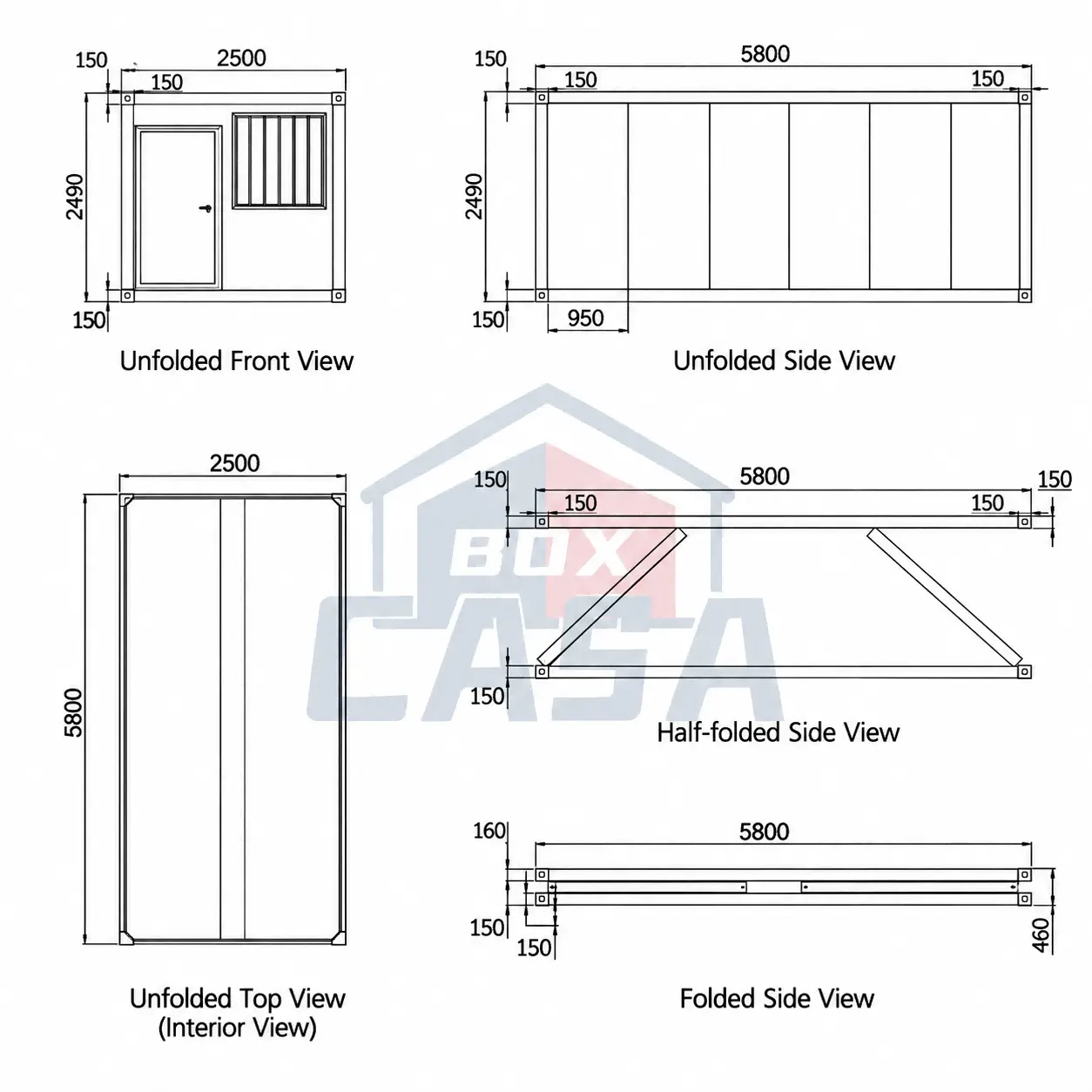
A Z-type foldable container house is designed to address the transportation challenge through a compact folding structure. Casa Box's product information specifies a folded thickness of approximately 30–40 cm and a loading capacity of around 20–22 sets in a 40-foot standard shipping container under the applicable configuration. The final capacity must be confirmed against the selected model and packing arrangement.
However, shipping efficiency is not determined by folded dimensions alone. Buyers need to consider the relationship between cargo volume, weight, packaging, freight terms and destination logistics. The most cost-effective solution is the one that delivers the required units to the project site safely and on schedule, with the fewest avoidable costs.
The Real Logistics Challenge Is Not Simply Getting More Units Into a Container
A modular building shipment is different from a shipment of small, uniform products. Each unit may include structural frames, wall panels, doors, windows, insulation and other components. The packaging arrangement must protect these parts while keeping the cargo within the dimensional and weight limits of the transport equipment.
When a conventional modular unit occupies a large amount of space during transit, the number of units that fit into one shipping container may be limited. The buyer then needs to arrange more container loads to move the same order quantity.
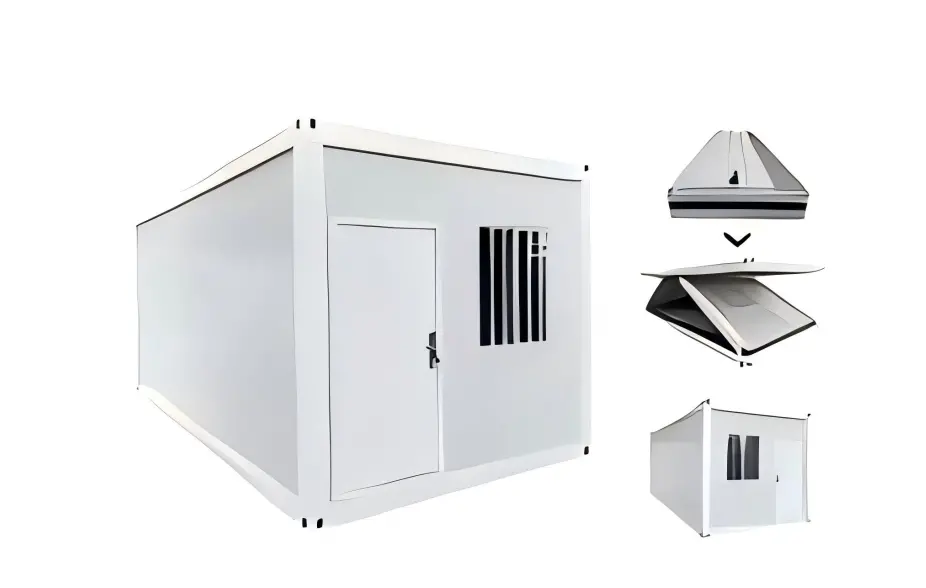
A foldable structure changes the way this space is used. Instead of transporting every unit at its fully deployed size, the main components can be folded into a more compact configuration. This reduces the volume occupied by each unit and can improve the number of complete sets shipped in one container.
The benefit is particularly relevant to projects where a large quantity of similar units must travel from one manufacturing location to a distant destination.
Consider a contractor ordering accommodation units for a remote construction project. The site may require the units to arrive in a coordinated batch so that installation can begin without delay. If each shipment carries fewer units than expected, the project may need additional freight bookings and a more complicated delivery schedule. A compact folding design can give the logistics team greater flexibility when planning the movement of the order.
Still, loading density should not be treated as the only purchasing criterion. The packing plan must account for the actual dimensions, weight and protection requirements of the complete shipment. A theoretical loading capacity has limited value if the proposed arrangement cannot be executed under the carrier's requirements.
How the Folding Structure Changes the Shipping Equation
The Z-type foldable container house uses an integrated linkage structure that connects the top frame, bottom frame and side wall panels. During folding, the main structural components move together through the designed linkage mechanism rather than being dismantled into numerous separate pieces.
The compact folded configuration reduces the space occupied during transport. According to the applicable product configuration, the folded thickness is approximately 30–40 cm. Casa Box indicates that around 20–22 sets can fit into a 40-foot standard shipping container, subject to confirmation of the final packing arrangement.
The practical advantage comes from how this design affects the entire shipment.
First, a smaller transport volume can improve the utilization of the available container space. Second, an integrated folding structure can simplify the handling of major components because the main parts remain connected. Third, a more predictable packing arrangement helps the supplier and freight forwarder coordinate loading, dispatch and delivery.
The structure does not remove every logistical requirement. Doors, windows, accessories and other components still need suitable protection. Cargo weight must remain within applicable limits, and the packing arrangement must allow the shipment to be secured properly.
For procurement teams, the useful question is therefore not simply how thin the folded unit becomes. It is whether the supplier can translate that compact configuration into a complete, practical and verifiable shipping plan.
A Better Way to Compare Shipping Costs
Comparing freight quotations only by the price of one container can lead to misleading conclusions. A quotation may appear cheaper while carrying fewer units, covering a different route or excluding charges that another supplier has already included.
A more useful comparison starts with the total shipment cost and the number of complete units delivered.
Cost per delivered unit = Total applicable logistics cost ÷ Number of complete units delivered
The total logistics cost should reflect the actual scope of the shipment. Depending on the agreed delivery terms, it may include origin handling, export documentation, ocean freight, destination handling, customs-related expenses and inland transportation.
The calculation should also account for whether all units arrive in usable condition. If inadequate packaging results in damaged panels or missing components, the apparent freight saving may be offset by replacement costs, additional handling and installation delays.
Rather than relying on a single headline freight rate, buyers should compare quotations using the same shipment assumptions.
A practical comparison framework
Product and packing scope
Confirm the model, number of complete sets, folded dimensions, gross weight and included accessories.
Shipment and freight terms
Check the container type, loading plan, shipping route, quotation validity and charges included in the offer.
Destination and site delivery
Account for port handling, customs arrangements, inland transport, unloading equipment and access to the installation area.
Delivery schedule
Compare expected arrival dates with site readiness, storage capacity and the planned installation sequence.
This framework helps buyers distinguish a genuinely more efficient shipping arrangement from a quotation that simply covers fewer services.
Where Bulk Shipping Plans Commonly Go Wrong
Even when a foldable container house offers good loading density, poor coordination can reduce the benefit. The problems often arise from the details surrounding the shipment rather than from the folding mechanism itself.
Packing capacity is assumed rather than confirmed
A supplier may provide an indicative loading quantity, but the final figure depends on the exact model, packaging arrangement and cargo restrictions. Additional accessories or protective materials can also affect the number of complete sets that fit into one container.
Before placing an order, request a packing plan showing the proposed loading quantity and the components included in each set. If the project requires several product configurations, confirm the capacity for each configuration separately.
Product price and transportation cost are evaluated separately
A low factory price does not necessarily result in a lower delivered cost. Buyers should assess the complete cost of getting the required units to the project location, including the logistics expenses that fall within their responsibility.
This is especially important when comparing products with different structures or shipping configurations. A product that occupies more transport space may require a different number of shipments, even when its purchase price is lower.
Delivery timing is not coordinated with site readiness
Container houses may arrive before foundations are ready, unloading equipment is available or installation personnel can begin work. Early delivery can create storage and handling requirements, while late delivery can disrupt the construction schedule.
For remote industrial projects, the logistics plan should be coordinated with the site team before dispatch. The intended unloading area, access routes, storage arrangements and installation sequence should be clear before the cargo arrives.
Destination logistics are overlooked
The shipping container reaching the destination port does not mean the units have reached their final location. Inland transport, road restrictions, unloading access and site-specific requirements can significantly affect the delivery process.
A project located near a major port may have straightforward onward transport. A mining camp or energy project in a remote area may require additional coordination. The destination should therefore be considered when evaluating the complete shipping plan, not after the order has been dispatched.
What Procurement Teams Should Request Before Shipment
For a bulk order, a reliable supplier should be able to explain how the product will be packed and how the proposed shipment relates to the customer's delivery requirements.
The following documents and details provide a useful starting point:
Final packing list: The number of complete units, included components and any separately packed items.
Packing dimensions and cargo weight: The folded dimensions and gross weight used to plan the shipment.
Loading arrangement: The proposed number of sets per container and confirmation that the configuration is suitable for the selected transport equipment.
Packaging and protection details: How the frames, panels, doors, windows and other vulnerable components will be protected during handling and transit.
Shipping quotation: The route, quotation validity, included charges and responsibilities of each party.
Delivery and unloading plan: The expected shipment schedule, destination arrangements and equipment required at the receiving site.
These details are particularly important for overseas buyers who may not be able to inspect the cargo before it leaves the factory. Clear documentation makes it easier to compare suppliers, prepare for customs procedures and coordinate the receiving team.
For larger projects, it is also worth confirming whether the order will be dispatched in one batch or several shipments. The best arrangement depends on production capacity, available storage, project milestones and the cost of coordinating deliveries.
When Does a Z-Type Foldable Container House Make Sense for Bulk Orders?
The Z-type design is worth considering when a project requires multiple modular units and transportation space is a significant part of the procurement decision.
Typical applications include construction workforce accommodation, mining camps, energy project facilities, temporary site offices and distributor orders intended for repeated deployment. These projects often involve standardized unit requirements, making it easier to plan loading arrangements and coordinate installation across multiple locations.
The benefits may be less pronounced for a small order where the shipment already fits within an existing freight arrangement or where destination handling represents a larger share of the total cost. Buyers should also consider whether the product configuration meets the project's structural, insulation, utility and intended-use requirements.
For distributors, loading efficiency can influence inventory planning and the cost of bringing products into a local market. For contractors, it can affect how many units arrive in each shipment and how deliveries align with construction milestones. For remote projects, it can help the team assess whether transportation arrangements are practical before committing to a large order.
The decision should be based on the complete project requirement rather than on one specification in isolation.
Planning a More Efficient Shipment With Casa Box
Casa Box's Z-type foldable container house uses an integrated linkage folding structure designed to reduce the space occupied during transportation. Its stated folded thickness is approximately 30–40 cm, with an indicative loading capacity of around 20–22 sets in a 40-foot standard shipping container under the applicable configuration.
For buyers placing bulk orders, these specifications provide a starting point for reviewing container utilization and shipment planning. The final loading quantity and logistics arrangement should be confirmed against the selected model, included components, cargo restrictions and destination requirements.
Before requesting a quotation, prepare the expected order quantity, destination, preferred delivery schedule and any project-specific requirements. The supplier can then confirm the applicable packing configuration and clarify the information needed for a meaningful freight comparison.
A well-planned shipment should do more than maximize the number of units in a container. It should protect the cargo, align deliveries with site readiness and make the overall logistics process easier to manage.
For detailed information about Casa Box Z-type foldable container houses, bulk-order packing plans and project requirements, please contact the sales team.
Content Center
Container house news, guides and project insights.