 en
en
 Italian
  Spanish
  Hungarian
  Thai
Thai  Japanese
  Portuguese
  Malay
Malay  Russian
  French
  German
  Arabic
  Indonesian
Detachable Container House for Brazil’s Construction Cost Challenges
Construction projects in Brazil often have to balance several cost factors at the same time. Materials, labor, transportation, site preparation, installation, and project duration can all influence the final budget. For projects outside major urban centers, logistics and access to skilled labor can add another layer of complexity.
This chooses temporary and semi-permanent buildings more important than it may appear at the beginning of a project. Site offices, worker accommodation, dining facilities, storage rooms, changing rooms, and other support spaces all require construction resources, yet many of these facilities are needed before the main project is completed or only for a defined operating period.
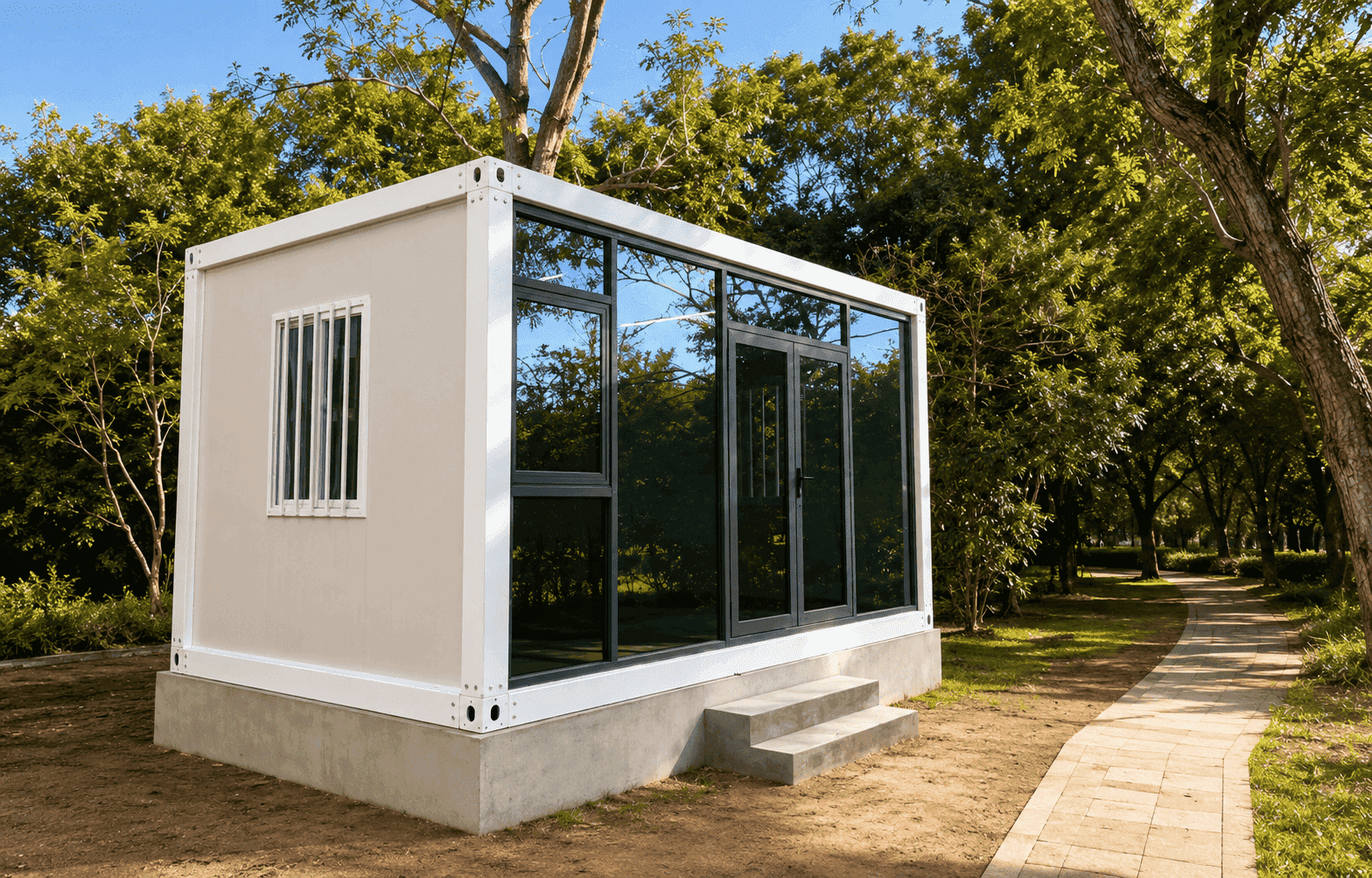
A Detachable Container House offers another way to organize these facilities. Structural components and enclosure systems can be prepared in a factory, transported to Brazil, and assembled at the project site according to the required layout. The building can subsequently be dismantled and potentially used at another location when the original project reaches a different stage.
For Brazilian construction companies, EPC contractors, industrial developers, and modular building distributors, the main question is not simply whether a detachable building has a lower purchase price. The more useful question is how the building affects the total project cost from procurement and transportation through installation, operation, and future reuse.
Where Construction Costs Begin to Increase
The cost of a project building is rarely limited to the quotation issued by the manufacturer.
A conventional site facility may involve architectural design, material procurement, local fabrication, structural work, wall installation, roofing, electrical installation, plumbing, finishing, and multiple stages of on-site labor. Each stage introduces its own scheduling and coordination requirements.
For a temporary construction facility, this creates a particular problem. The project may invest substantial resources in a building that has a limited period of use.
A modular system changes the cost structure by moving much of the production process away from the construction site.
The building components can be manufactured before they arrive at the project location. Site work then focuses primarily on foundation preparation, assembly, connection of building components, and installation of the required services.
The economic value comes from the overall process rather than one isolated product feature.
Factory Production and Site Labor
Labor is an important part of construction costs, particularly when a project requires a large number of repetitive building units.
Producing structural components and enclosure systems in a controlled manufacturing environment allows repeated components to follow consistent dimensions and production procedures. For projects requiring multiple accommodation rooms or offices, this can reduce the amount of individual fabrication required at the site.
The site installation team can work from prepared components rather than starting each building from raw materials.
For Brazilian projects with a tight construction schedule, this distinction can also affect project coordination. Fewer fabrication activities at the site can make it easier to plan the sequence of building installation around the main construction program.
Construction Time Has a Financial Cost
A building that is completed later than planned can affect more than the building budget.
If worker accommodation is not ready, additional accommodation arrangements may be required. If project offices are delayed, administrative and engineering teams may need temporary alternatives. If dining or service facilities are unavailable, the project may need to maintain temporary arrangements for longer than expected.
For this reason, installation time should be considered when evaluating a modular building.
A Detachable Container House can be assembled from factory-produced components after the required site foundation is prepared. The degree of time saving depends on the building configuration, site conditions, number of units, utility connections, and installation organization, but the basic principle remains important: transferring fabrication work away from the site can reduce the amount of construction activity that needs to take place after delivery.
Brazil’s Geographic Scale Makes Logistics Part of the Building Cost
Brazil covers a very large geographic area, and construction projects can be located far from major manufacturing centers and ports.
For modular building procurement, transportation therefore needs to be considered from the beginning rather than after the product has already been selected.
A building with a low factory price can become less economical if its transportation requirements are inefficient. The opposite can also be true: a modular system with a higher initial unit price may provide a better overall project cost when its packaging, shipping, installation, and future reuse are considered together.
This is why Brazilian buyers should evaluate the delivered cost of a modular building rather than comparing factory prices alone.
Transportation Efficiency Is a Project Variable
For a construction company ordering several dozen modular units, shipping volume can have a direct effect on the number of containers required.
The structure of the building determines how efficiently its components can be packed. A detachable system designed specifically for disassembly and transportation can make better use of shipping space than a completed building that has to be transported as a large assembled unit.
The final calculation should include:
· Factory production cost
· Ocean freight or other long-distance transportation
· Port handling
· Inland transportation
· Unloading
· Site assembly
· Utility installation
· Future relocation or reuse
These costs should be assessed together.
For large Brazilian projects, the transportation route also needs to be considered carefully. The final destination may require road transportation after the building arrives at a Brazilian port, and site access conditions can influence unloading and installation.
A professional detachable container house manufacturer should therefore be involved in logistics planning before production begins.
Why the Initial Purchase Price Can Be Misleading
When modular buildings are compared only by unit price, important differences can easily be missed.
Consider two building systems with different production costs. The first may appear cheaper at the factory, but require more site labor, more finishing work, more transportation volume, or more difficult relocation. The second may have a higher initial quotation but require fewer site operations and provide greater reuse potential.
For project owners, the second option may produce a lower total cost over its service life.
This is particularly relevant for temporary facilities.
A construction company may use the same accommodation or office building across several projects. In that situation, the value of the building does not end when the first project is completed.
Reuse Changes the Cost Calculation
A detachable structure can be dismantled and transported after a project is completed.
This creates the possibility of allocating the investment across multiple projects rather than treating the building as a single-use facility.
For contractors managing several construction sites, this can change the way modular buildings are evaluated.
A facility initially purchased for a major infrastructure project may later be transferred to another construction site, mining operation, industrial project, or temporary camp, subject to the building's condition and the requirements of the new site.
The practical value of reuse depends on several factors, including dismantling procedures, component durability, transportation costs, the condition of the building after use, and the suitability of the original configuration for the next project.
A detachable building therefore works best when relocation and future use are considered during the initial planning stage.
How Casa Box Addresses the Cost Structure of Brazilian Projects
Casa Box's approach to Detachable Container House production focuses on the complete modular building process rather than the structure alone.
The building can be configured according to the intended use, project scale, climate, occupancy, transportation conditions, and future requirements.
For Brazilian customers, this project-based approach is important because a construction office does not need the same configuration as worker accommodation, while an industrial support facility may require different wall, insulation, and internal arrangements again.
Standardized Components with Project-Specific Layouts
Standardization helps control manufacturing complexity.
Structural components, wall systems, doors, windows, and other building elements can follow established production specifications, while the internal arrangement can be adapted to the project's requirements.
This provides a balance between repeatable manufacturing and project-specific design.
For a large construction project, the same basic structural system can be used across multiple units while the internal layouts are adjusted for different functions.
For example, accommodation units may prioritize sleeping rooms and sanitary facilities, while site offices may require meeting rooms, individual offices, and technical spaces.
The result is a modular building system that can support different functions without requiring an entirely different construction method for each facility.
Bolt-Connected Structural System
The connection method is another factor in the long-term economics of a detachable building.
Casa Box uses a bolt-connected structural system for its detachable container solutions.
Bolted connections support assembly and dismantling without relying on permanent site welding for the primary structural installation. This is particularly useful when the building is expected to be relocated or reconfigured later.
For contractors, the connection system should be evaluated not only from the perspective of initial installation but also in terms of future maintenance, dismantling, transportation, and reuse.
Galvanized Steel Frame
The structural frame is manufactured using galvanized steel.
For Brazilian projects exposed to outdoor conditions, corrosion protection is an important consideration when evaluating the expected service period of the building.
The galvanized surface provides an additional protective layer to the steel, helping the frame withstand environmental exposure.
The actual durability of a modular building still depends on the complete building system, including fabrication quality, connection details, enclosure systems, maintenance, and site conditions.
What Does a Cost-Effective Detachable Container House Need to Get Right?
Cost reduction should never mean removing the elements required for safe and reliable operation.
A project building that requires frequent repairs or performs poorly under local environmental conditions can create additional costs after installation.
For this reason, cost efficiency should be considered across several stages of the building's life.
Cost Stage | What Brazilian Buyers Should Evaluate |
Procurement | Structural specification, layout, materials, and customization |
Transportation | Packing method, container requirements, route, and unloading |
Installation | Foundation preparation, assembly process, and site labor |
Operation | Insulation, maintenance, utilities, and building durability |
Relocation | Dismantling, transportation, and reassembly requirements |
Reuse | Whether the building can serve another project after relocation |
This approach provides a more realistic basis for comparing modular building systems.
The lowest purchase quotation is not necessarily the lowest project cost.
Applications Where Cost Control Matters Most
The economic advantages of a detachable building become more apparent when the project requires multiple support facilities or when the buildings are needed for a defined period.
Construction Site Offices
A construction site office needs to be operational before the main project reaches full production.
A modular office can provide space for project managers, engineers, supervisors, and administrative personnel without requiring a conventional building program for a facility that may only be needed during construction.
As the project progresses, the office can remain in service or be relocated when the active work area changes.
Worker Accommodation
Large construction projects may need accommodation for workers before permanent facilities are available.
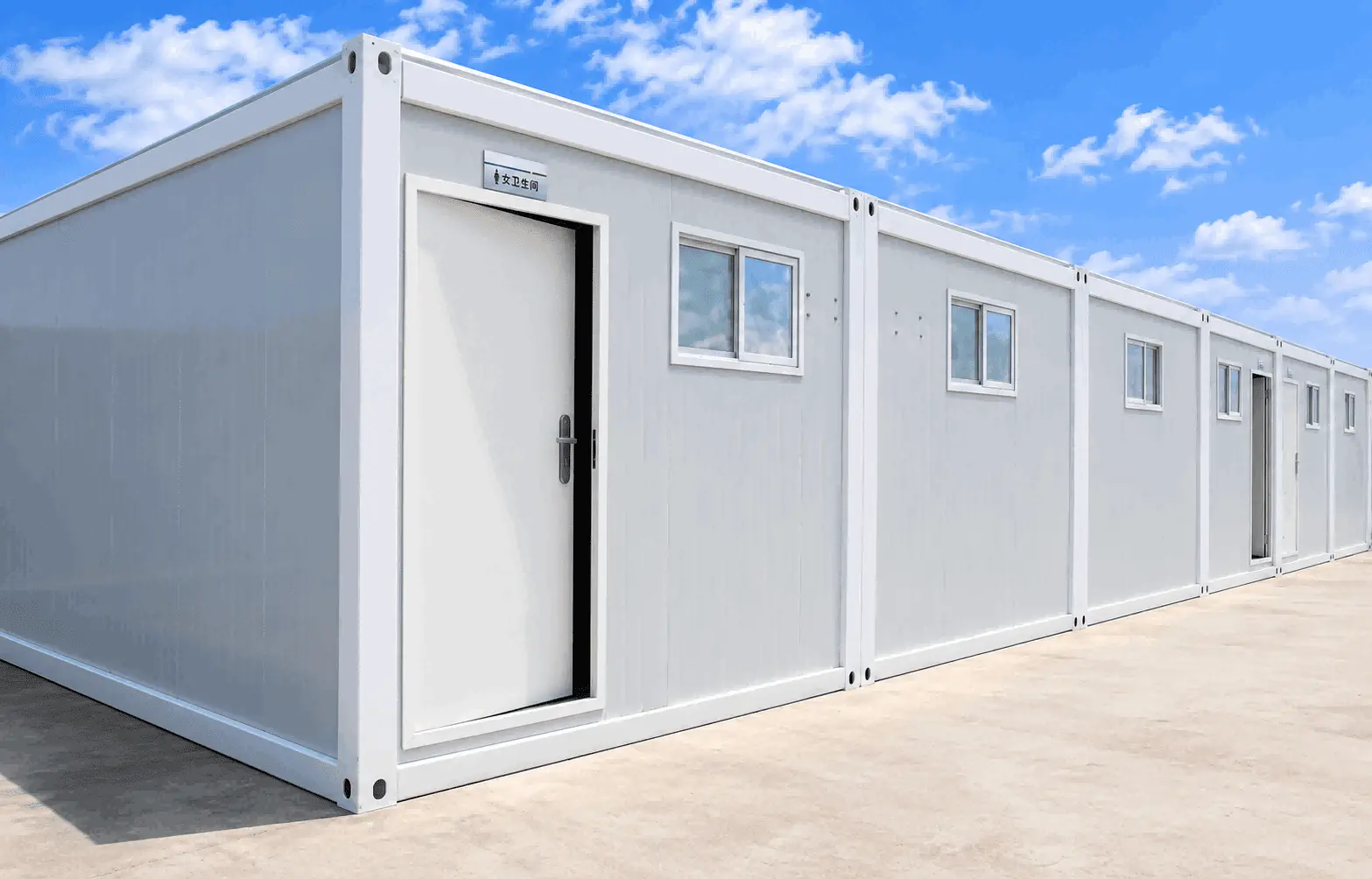
A modular accommodation system can combine sleeping rooms, sanitary facilities, dining spaces, and common areas according to the workforce requirements.
The building specification should consider occupancy, ventilation, insulation, fire performance, sanitation, and the expected service period.
Industrial and Infrastructure Projects
Industrial plants, logistics facilities, roads, bridges, and other infrastructure projects often require temporary buildings during construction and commissioning.
The same modular building system can be configured as an office, accommodation unit, service room, storage facility, or other support space.
This allows the project team to match the building investment to the actual function required at each stage.
Contractor-Owned Project Facilities
For contractors working across multiple sites, detachable buildings can become part of a reusable equipment and infrastructure portfolio.
Instead of purchasing a new temporary facility for every project, the contractor may transfer existing modular buildings between sites when their condition and configuration are suitable.
This model requires proper asset management, but it can improve the long-term utilization of the building investment.
How Brazilian Buyers Should Evaluate a Detachable Container House
A reliable procurement decision should begin with the project rather than the product catalogue.
The buyer should first establish where the building will be used, how many people it will accommodate, how long it will remain on site, and whether relocation is expected.
The transportation route also needs to be reviewed before the final configuration is approved.
For projects in different regions of Brazil, site conditions can vary considerably. Coastal exposure, rainfall, temperature, local transportation, foundation conditions, and access roads may all affect the final specification.
A suitable supplier should be able to discuss these conditions before production rather than simply provide a standard quotation.
The following information is particularly useful when requesting a project proposal:
· Project location and site access conditions
· Building purpose and required floor layout
· Number of units and expected occupancy
· Estimated service period
· Local environmental conditions
· Transportation route and delivery requirements
· Potential future relocation or expansion
Providing these details at the quotation stage allows the manufacturer to evaluate the building as part of the project instead of treating it as an isolated product.
Detachable Container House as a Total-Cost Decision
Brazil's construction market requires contractors and project owners to look beyond the factory price of temporary buildings. Labor, transportation, installation, project schedule, maintenance, and future reuse can all influence the actual cost of a facility.
A Detachable Container House provides a different cost structure by moving a significant part of building production into the factory and allowing the finished modular system to be assembled at the destination. Its detachable structure can also provide future relocation and reuse options when the original project is completed.
Casa Box combines a galvanized steel frame, bolt-connected structure, standardized manufacturing, and project-specific configuration to support different construction and industrial applications.
For Brazilian projects, the most appropriate solution depends on the location, building function, quantity, service period, transportation route, and future use. Evaluating these factors together provides a more reliable basis for determining whether a detachable modular building delivers a genuine economic advantage.
For detailed specifications, project layouts, transportation planning, and quotations for Detachable Container House projects in Brazil, please contact the Casa Box sales team. The building configuration can be discussed according to the project's actual requirements, from site offices and worker accommodation to larger construction and industrial support facilities.
Content Center
Container house news, guides and project insights.