 en
en
 Italian
  Spanish
  Hungarian
  Thai
Thai  Japanese
  Portuguese
  Malay
Malay  Russian
  French
  German
  Arabic
  Indonesian
What Should Mining Companies Consider When Choosing a Detachable Container House in Chile?
For a mining company, choosing accommodation or site facilities is rarely as simple as selecting a building from a catalogue.
The building may look straightforward from the outside, but the requirements behind it are not. A mining camp may need accommodation for workers, offices for engineers and supervisors, dining areas, sanitary facilities, changing rooms, storage spaces, and other supporting rooms. The number of people may change during different project stages, while the buildings themselves may need to remain in service for years.
That is why the first question should not be, “Which Detachable Container House is the cheapest?”
A better question is:
“What does this mining project actually require the building to do?”
For mining companies operating in Chile, that distinction matters. A modular building that works well for a short construction camp may not be the right choice for long-term accommodation. A standard office layout may look practical on a drawing but become inconvenient when dozens of people use the facility every day.
The right Detachable Container House should fit the project, the people using it, and the way the site is expected to operate.
Start With the Mining Camp, Not the Container
One of the easiest mistakes in modular building procurement is starting with the product.
A buyer receives a catalogue, chooses a size, adds several rooms, and then tries to make the project fit the available configuration.
The better approach is to work in the opposite direction.
Start with the site.
How many workers will live there? How many will work in the offices? Will the accommodation be used continuously or only during certain phases? Will the same personnel remain on site, or will there be regular shift changes? Does the project need dining and recreation facilities? How much space should be reserved for circulation and service areas?
These questions sound basic, but they have a direct effect on the building design.
A mining accommodation facility is not simply a group of bedrooms. It is part of the daily operating system of the site.
Workers need to sleep, eat, wash, rest, work, and move between different areas. Supervisors and engineers need offices where they can work without interfering with accommodation areas. Service spaces need to be accessible for maintenance without unnecessarily disturbing occupied rooms.
A good modular building layout takes these relationships into account.
This is also why a professional supplier should ask questions before preparing the final configuration.
If the supplier only asks for the number of units and delivery date, the design discussion has probably not gone far enough.
The Number of People Matters More Than the Number of Rooms
Mining projects can have substantial differences in workforce size.
A small exploration or early-stage project may need a relatively limited site facility. A larger construction or production project may require accommodation for a much bigger workforce, together with offices and shared facilities.
Simply multiplying the number of bedrooms is not enough.
The project needs to consider how people will actually use the space.
For example, if a facility is designed for a large rotating workforce, the accommodation arrangement may need to account for shift patterns and common areas. Dining facilities may need to handle peak occupancy rather than average occupancy. Sanitary facilities need to be planned according to actual use rather than simply the available floor area.
This is where modular planning becomes useful.
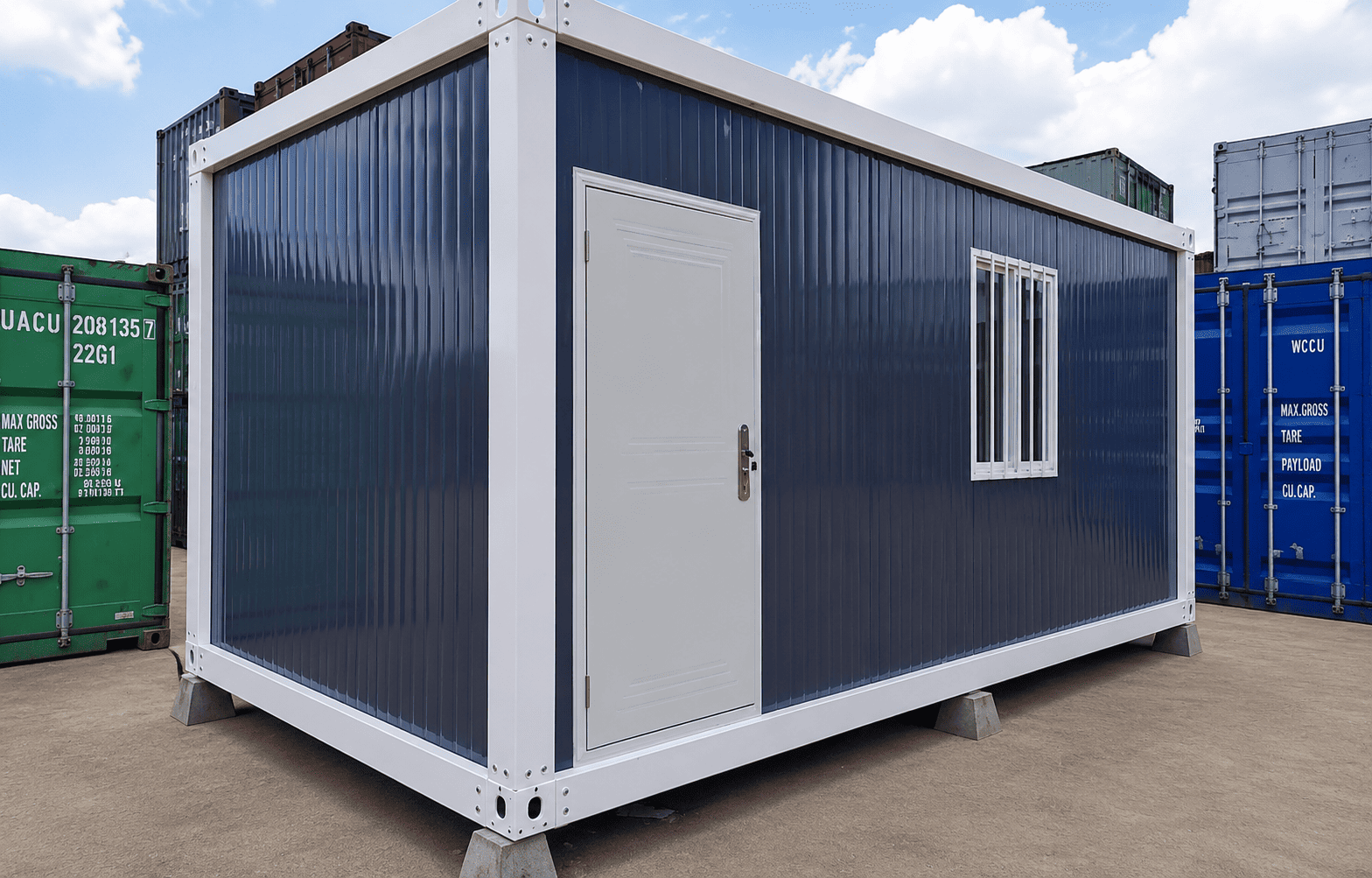
A Detachable Container House system can be arranged into different combinations according to the project's requirements. The value is not that every module can be changed into anything. The value is that the building system provides a practical framework for creating a facility around a known operational requirement.
For a mining company, that means the starting point should be a personnel and facility plan, not a product model.
A Simple Planning Framework
Before discussing the final building specification, the project team can establish:
Project Question | Why It Matters |
How many people will use the facility? | Determines accommodation and common-space requirements |
How long will the facility operate? | Influences material and building specification |
What are the main functions? | Determines room layouts and building combinations |
How often will occupancy change? | Affects accommodation planning |
Will the facility be relocated? | Influences structural and connection requirements |
What services are required? | Determines electrical, sanitary, and utility planning |
This information gives the manufacturer something meaningful to work with.
The Service Period Should Influence the Specification
There is a tendency to treat all temporary buildings as short-term structures.
That assumption does not always fit mining projects.
A building can be temporary in the sense that it is not part of the permanent mine infrastructure, while still being expected to operate for several years.
That changes the procurement decision.
If a building is only required for a short construction stage, the project may prioritize quick deployment and straightforward configuration.
If the same type of building is expected to support a long-term mining operation, durability, insulation, maintenance access, internal finishes, and the overall quality of the building envelope become more important.
The two projects may both order a “Detachable Container House,” but they should not necessarily receive the same specification.
This is an important point for buyers.
Temporary does not mean low-specification.
A temporary facility can still be a critical working environment for the people who depend on it every day.
What Should Buyers Look for in the Structural System?
Once the project requirements are clear, the next step is to examine how the building is actually constructed.
The word “detachable” deserves particular attention.
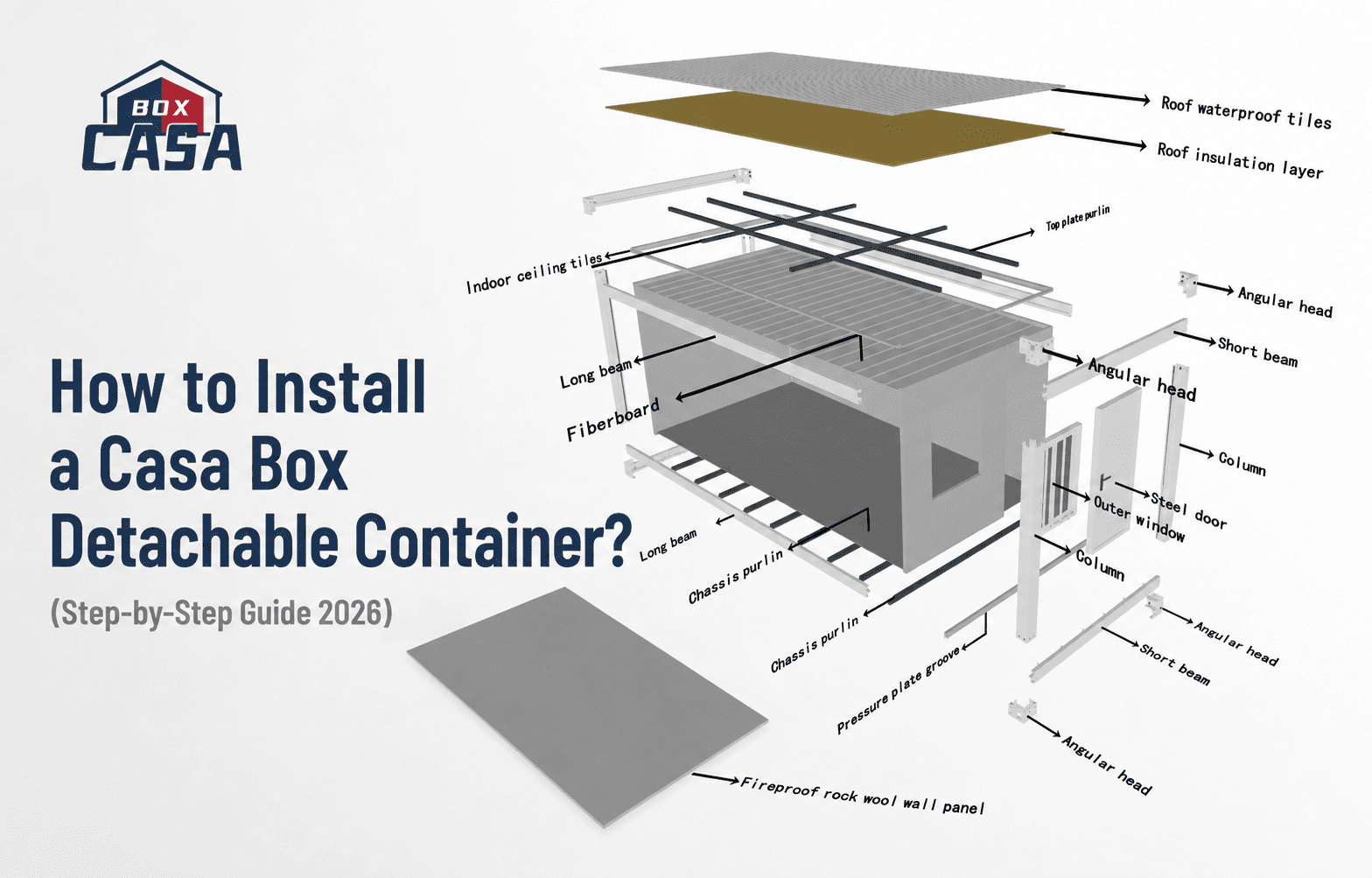
A building should not be considered detachable simply because it can theoretically be taken apart. The structural system, connection method, component design, and installation process all affect whether dismantling and reassembly are practical.
Bolt-Connected Structure
Casa Box uses a bolt-connected structural system for its Detachable Container House.
For mining projects, the significance goes beyond installation.
If the building is expected to remain at one site permanently, the connection method is mainly an assembly consideration. If the contractor expects to relocate the facility later, the connection method becomes part of the building's future value.
A bolt-connected structure provides a practical basis for assembly and dismantling without relying on permanent welding for the main structural connections.
That can be important for contractors managing facilities across different project stages or sites.
The key point is not that bolted construction is automatically better for every project. It is that the connection system should match the intended life of the building.
If relocation is part of the plan, it should be considered before the building is purchased, not after the first project has finished.
Galvanized Steel Frame
The structural frame is another area worth checking carefully.
Casa Box uses a galvanized steel frame for its detachable container solutions. Galvanization provides an additional layer of protection to the steel surface and is relevant when buildings are expected to remain exposed to outdoor conditions for extended periods.
However, buyers should avoid judging durability from one material alone.
The complete building system matters: steel quality, fabrication, connection details, wall system, roof design, sealing, installation quality, and maintenance all contribute to the actual service performance.
A serious supplier should therefore be willing to explain the complete structural system rather than simply naming a material.
The Wall System Should Be Chosen for the People Inside
The walls of a mining camp are not just an enclosure.
They separate workers from the outdoor environment and have a direct influence on how comfortable the building is during daily use.
Casa Box can configure Detachable Container Houses with Rock Wool Sandwich Panels.
For accommodation and office buildings, insulation is not a specification that should be selected simply because it appears on a product sheet. The more useful question is what conditions the building will face and what level of indoor comfort the project expects.
A worker accommodation building may have completely different requirements from a storage room.
Likewise, an office where people spend most of the working day should be considered differently from a building used only occasionally.
This is where project-specific configuration becomes important.
The supplier needs to understand:
· The building's main function
· Expected occupancy
· Service period
· Local environmental conditions
· Internal room arrangement
· Required doors and windows
· Electrical and utility requirements
Only then does the choice of wall system become meaningful.
A good specification is not necessarily the heaviest or most expensive one. It is the one that makes sense for the actual building.
Layout Matters More Than a Standard Floor Plan
A mining company may receive a standard accommodation layout that looks perfectly reasonable on paper.
Then people start using it.
The dining area becomes crowded during shift changes. The office needs another work area. Workers need a better connection between accommodation and sanitary facilities. Storage space is insufficient. Maintenance access becomes inconvenient.
These problems are difficult to solve once the building has already been manufactured.
That is why layout planning should happen early.
For Casa Box, the Detachable Container House can be configured according to different building functions and project requirements. The structural system provides a standardized basis, while the internal arrangement can be developed around the intended use.
This approach is particularly useful when several types of facilities are required within the same mining project.
An accommodation unit may prioritize sleeping rooms and sanitary facilities.
A site office may need separate working areas and meeting space.
A dining facility requires a different internal arrangement again.
The point is not to customize every component without reason. Excessive customization can make a modular project unnecessarily complicated.
The better approach is to standardize the elements that benefit from repetition while adjusting the parts that genuinely affect how the building will be used.
Think About Maintenance Before the First Day of Operation
A building is easiest to inspect when it is new.
Mining companies should think further ahead.
What happens after the building has been occupied for one year? What about three years?
Doors and windows will be used repeatedly. Wall panels may be damaged during daily operation. Electrical and plumbing systems will require maintenance. Individual components may eventually need replacement.
This is why a supplier's after-sales capability deserves more attention than it often receives during procurement.
The important question is not simply whether a supplier provides a warranty.
It is whether the supplier understands the building well enough to support the customer when a specific component needs to be checked, repaired, or replaced.
For modular buildings used in remote projects, this can make a practical difference.
A well-organized component system also makes maintenance easier to manage because the project team can identify what needs attention without treating every problem as a completely new construction task.
What Should Be Confirmed Before Production Starts?
A modular building is manufactured before it reaches the mining site.
That means decisions made during procurement become physical components later.
Changing a room layout after production is much more inconvenient than changing it during the design stage.
For this reason, mining companies should confirm several points with the supplier before approving production.
1. Final Layout
The room arrangement should be based on actual occupancy and daily use.
2. Structural Specification
The buyer should understand the frame material, connection method, and relevant structural details.
3. Wall and Roof System
The enclosure should correspond to the project's environmental and operational requirements.
4. Doors and Windows
Their location affects circulation, ventilation, daylight, and the way rooms are used.
5. Utilities
Electrical, water, drainage, air conditioning, and other services should be considered before production rather than added as an afterthought.
6. Installation Requirements
The supplier should clearly explain what needs to be prepared at the project site before the buildings arrive.
This last point is often overlooked.
A modular building can only be installed efficiently if the destination is ready for it.
How Should a Mining Company Compare Suppliers?
Price will always matter.
It should not, however, be the first and only comparison.
When reviewing several suppliers, the project team can use a simple procurement checklist:
Area to Check | Questions for the Supplier |
Structure | What steel system and connection method are used? |
Enclosure | What wall and roof materials are available? |
Layout | Can the plan be developed around actual occupancy? |
Manufacturing | Which components are completed before shipment? |
Installation | What site preparation is required? |
Utilities | How are electrical and sanitary requirements coordinated? |
Relocation | Can the structure be dismantled and reassembled? |
Support | What technical assistance is available after delivery? |
This kind of comparison helps separate a manufacturer from a company that simply sells a standard container product.
A good supplier should be comfortable discussing details.
If a supplier avoids questions about structure, installation, layout, or future use and focuses only on the final price, the buyer should probably ask more questions before signing the order.
Where Casa Box Fits Into the Procurement Process
Casa Box's role is not simply to provide a standard container and leave the customer to solve the rest.
The Detachable Container House system is based on a galvanized steel frame, bolt-connected structure, and factory-produced components. The internal configuration can then be developed according to the intended use.
For a mining project in Chile, this means the building can be considered as part of the wider site plan rather than as an isolated product.
The same basic structural system can support accommodation, offices, dining facilities, and other project support spaces, while the layouts and specifications can be adjusted according to their functions.
This is also where the relationship between manufacturer and customer becomes important.
A mining company knows its operation better than any supplier does.
The manufacturer, on the other hand, should know the building system well enough to point out where a proposed layout may create installation or operational problems.
Good project cooperation happens somewhere between those two areas of knowledge.
The customer explains how the facility needs to work.
The manufacturer translates those requirements into a building that can actually be produced, transported, assembled, and maintained.
That is a much more useful relationship than simply selecting a model number from a catalogue.
The Right Detachable Container Is the One That Fits the Project
There is no single Detachable Container House specification that makes sense for every mining project in Chile.
A short-term construction camp, a long-term accommodation facility, and a site office may all require different decisions.
The right building depends on how many people will use it, how long it will remain in service, what functions it needs to support, how it will be installed, and whether the facility may have another use after the current project ends.
For mining companies, the most important procurement decision is therefore not choosing the building with the longest list of specifications.
It is choosing a building whose specifications make sense for the actual project.
That means looking beyond the catalogue, asking difficult questions before production, and making sure the manufacturer understands what happens to the building after it leaves the factory.
Casa Box develops Detachable Container House solutions with this project-based approach, combining a galvanized steel frame, bolt-connected structure, configurable layouts, and factory production for accommodation, offices, dining facilities, and other mining support buildings.
For detailed specifications, project layouts, and configuration recommendations for mining projects in Chile, please contact the Casa Box sales team. The final solution can be developed around the project's actual workforce, building functions, service period, and site requirements.
Content Center
Container house news, guides and project insights.