 en
 Italian
 Spanish
 Hungarian
 Thai
 Japanese
 Portuguese
 Malay
 Russian
 French
 German
 Arabic
 Indonesian
What Should You Check Before Choosing an Expandable Container House?
Choosing an expandable container house requires more than comparing product photos or checking the quoted price. Buyers need to confirm the structural design, insulation, utility configuration, delivery scope and installation requirements before committing to an order. Missing details at the purchasing stage can lead to extra site work, delayed delivery or unexpected costs after the unit arrives.
For construction contractors, mining companies, accommodation providers and property developers, the right configuration depends on the intended use and the conditions at the destination. Temporary site offices may need a straightforward interior layout, while worker accommodation and residential projects require closer attention to ventilation, sanitary facilities, fire safety and local building regulations.
Casa Box offers an expandable container house range for different project requirements. Before selecting a model, buyers should establish what the factory will supply, which specifications need to be confirmed and what work must be completed locally.
Define the Project Requirements Before Requesting a Quotation
Start with the intended use and the conditions at the destination. Suppliers can recommend suitable configurations more accurately when they know how the space will be used, how many people it must accommodate and which facilities are required.
Prepare a project brief covering the application, expected occupancy, destination country, required quantity, preferred layout and delivery schedule. For accommodation projects, include the number of bedrooms, bathrooms, kitchens and shared facilities. For construction or industrial sites, consider whether the building will serve as an office, meeting room, staff rest area or temporary living space.
The expected service life also deserves attention. Buildings used for a short construction phase may have different requirements from units intended to remain in place for several years. Longer use can place greater emphasis on interior durability, insulation performance, maintenance access and replacement parts.
Buyers should also establish whether the project requires a standard configuration or customized features. Changes to windows, doors, internal partitions, electrical systems and plumbing can affect production schedules and costs. Confirming these requirements before manufacturing begins is generally easier than requesting alterations after the drawings have been approved.
Check the Structural Design and Expansion Mechanism
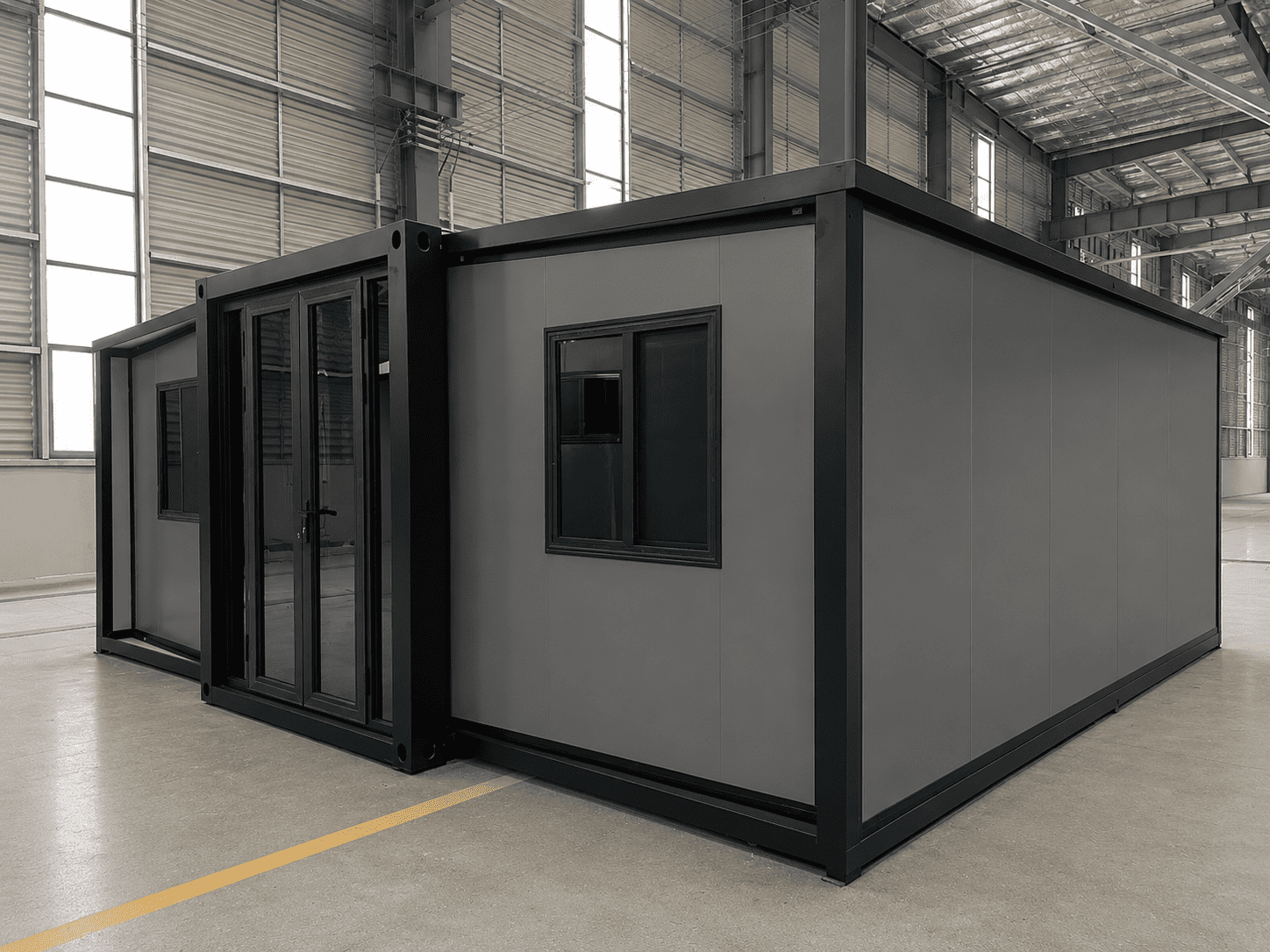
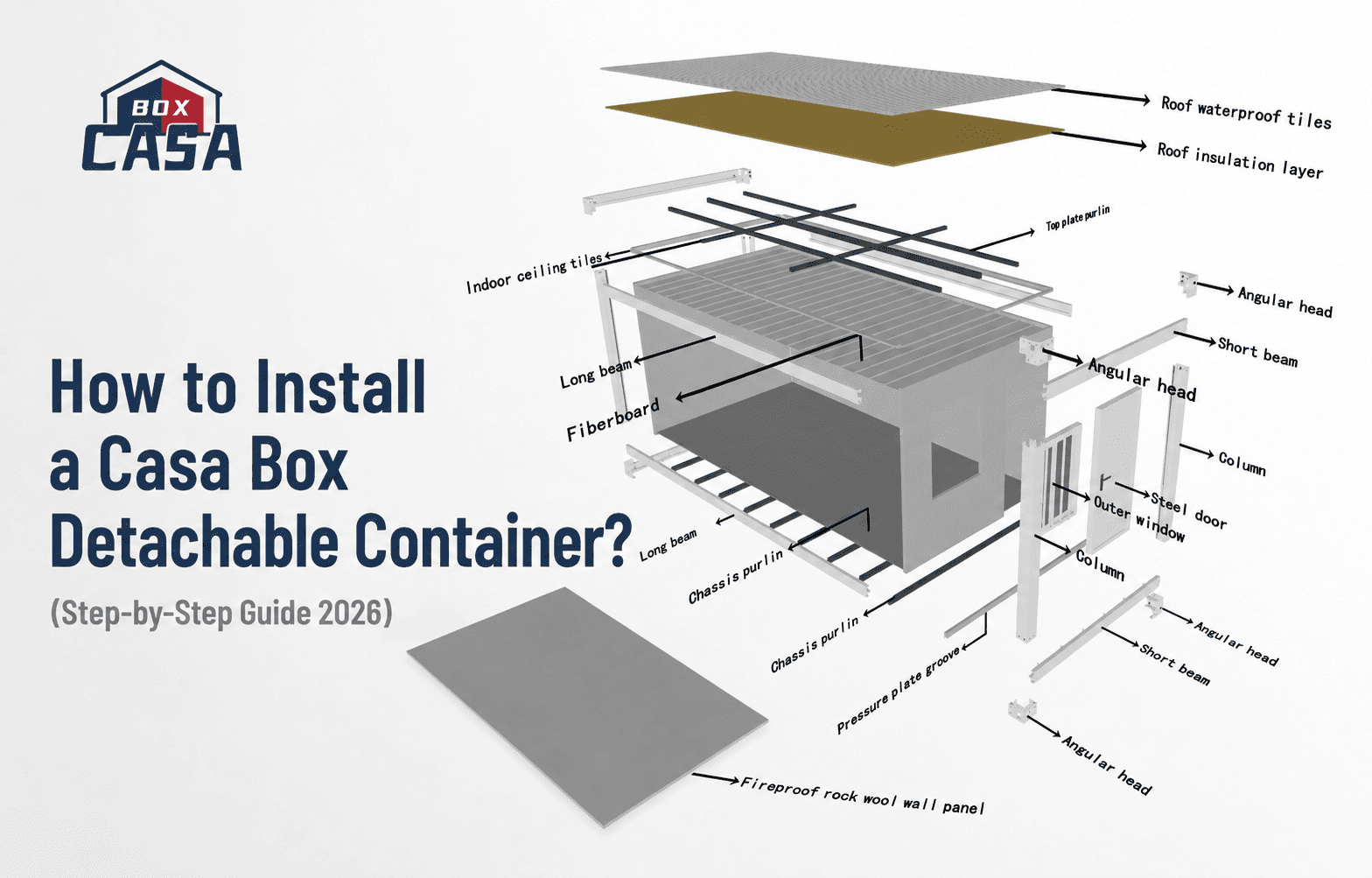
The expansion mechanism determines how the folded building opens and how its sections are secured in the usable configuration. Buyers should request drawings showing the main frame, moving sections, connection points and support arrangements rather than relying on product photographs alone.
Ask the supplier to explain the opening procedure and identify the components that require locking or fastening after expansion. Installation instructions should cover the correct sequence, the equipment required and the checks that must be completed before the building enters service.
Pay particular attention to the main frame materials, connection methods, support points, levelling requirements and locking arrangements. The supplier should also explain which moving components require regular inspection or adjustment.
For projects involving multiple units, confirm that the approved design applies to every unit in the order. Differences in openings, partitions or service connections can complicate installation when buildings are placed side by side.
Structural requirements depend on the destination. Wind exposure, seismic conditions, snow loads and local building regulations may affect the design or the supporting documentation required for approval. Request specifications and test reports relevant to the proposed model and site conditions. General claims about structural strength should not replace project-specific verification.
Review the Wall Panels, Insulation and Weather Protection
The building envelope affects indoor comfort, energy use and maintenance. Its performance depends on the roof, walls, floor, doors, windows and the joints connecting these components.
When reviewing an expandable container house, ask for the wall panel thickness, core material and available thermal performance information. Check whether the roof and floor use the same construction as the walls or require separate specifications. Connections between panels and the frame also deserve attention, particularly around corners and openings where gaps may affect air and water sealing.
Climate conditions should guide the selection.
Destination conditions | Details to verify |
Hot and humid climates | Insulation performance, ventilation, condensation control and moisture-resistant finishes |
Cold climates | Thermal performance, door and window seals, thermal bridges and heating requirements |
Coastal environments | Corrosion protection, exposed fasteners, coating maintenance and salt exposure |
Dusty or windy locations | Opening seals, door hardware, ventilation arrangements and water penetration control |
Areas with heavy rainfall | Roof joints, external seals, surface drainage and water discharge arrangements |
These checks are particularly important for buildings used as accommodation. Indoor temperature and humidity can affect occupant comfort as well as the condition of furniture, electrical equipment and interior finishes.
Ask the supplier to identify the protective treatment used on the steel frame and provide the relevant specification. Galvanizing, paint systems and other protective coatings should be evaluated according to the actual materials and environmental conditions. Buyers should also clarify the maintenance required during operation.
General descriptions such as “weather-resistant” do not provide a complete technical specification. Where the project has demanding environmental conditions, the purchasing team should confirm the relevant performance requirements before approving the order.
Confirm the Electrical, Water and Drainage Configuration
Utility arrangements need to be agreed before production because the location of service entry points can affect the building layout and the work required on site.
For electrical systems, confirm the destination country's supply voltage and frequency, along with the required sockets, lighting, distribution equipment, grounding and protective devices. Buyers should establish whether the quoted configuration is compatible with the local supply or whether changes will be necessary.
Water supply and wastewater arrangements require the same attention. Ask where the water inlet and drainage outlet are positioned, what connection sizes are used and whether the supplied configuration includes internal piping and sanitary fixtures. Projects without access to municipal services may require separate solutions for water storage, wastewater treatment or temporary utilities.
The quotation should clearly distinguish between factory-installed equipment and external connections completed by local contractors. Internal wiring, for example, does not necessarily mean the building includes external cables, site distribution equipment or the final electrical connection.
For projects with several expandable container houses, review the utility layout as a whole. Check whether pipes, cables and inspection points remain accessible after installation. Planning these interfaces early can reduce additional work and make future maintenance easier.
Check the Installation Conditions at the Project Site
Expandable container houses require suitable site conditions for unloading, positioning and opening. Even when much of the construction is completed at the factory, the project team must prepare the ground and provide sufficient working space.
Begin by confirming the required support arrangement. Depending on the unit design and site conditions, the project may need a concrete slab, engineered support pads or another approved foundation solution. The supplier should provide relevant support-point drawings, while the site engineer assesses ground conditions, load requirements and local regulations.
Access for delivery vehicles is another practical consideration. Check road width, turning space, overhead obstructions, unloading positions and the equipment needed to move the folded unit into place. Available space must accommodate not only the delivered building but also the movement of its expanding sections.
Before delivery, assign responsibility for ground preparation, unloading, positioning, levelling, expansion, utility connections and final inspection. Clear responsibilities help prevent disputes between the supplier, transport company and local contractor.
For larger accommodation projects, the site layout should also account for access roads, drainage, pedestrian movement, fire access where required and maintenance space around the buildings.
Installation time should be confirmed for the selected model and the agreed scope of work. The time needed to open the structure may not include unloading, levelling, utility connections, furniture installation or final inspection. Buyers should use the complete installation plan when preparing the project schedule.
Verify Documentation and Local Compliance Requirements
Product specifications and approval requirements vary by country and intended use. Buyers should identify the applicable rules before placing an order, particularly when the building will be used for accommodation, public access or long-term occupancy.
Request the available technical documents for the exact model and configuration. Depending on the project, these may include structural drawings, material specifications, electrical information, installation manuals, inspection records and documentation relating to fire performance.
Local requirements should be checked separately. Building classification, occupancy, fire safety, insulation, electrical installation and foundation requirements may differ between temporary facilities and permanent residential buildings. The fact that a structure can be transported or installed quickly does not automatically exempt it from local approval procedures.
Fire safety deserves particular attention. Ask for information about the panel core material, relevant test documentation and available fire performance ratings. The project team should also assess escape routes, alarms and other measures required for the intended occupancy.
For locations exposed to strong winds, seismic activity or heavy snow, confirm that the proposed configuration has been assessed against the applicable design conditions. If local authorities require third-party testing or certification, establish whether the necessary documents can be supplied before production.
Clear documentation helps the buyer, supplier, engineer and local contractor work from the same technical requirements. It also reduces the risk of discovering approval problems after the units have been manufactured or shipped.
Evaluate the Supplier's Production and Quality Control
Choosing an expandable container house supplier requires more than comparing catalogue prices. Buyers need to establish whether the manufacturer can deliver the approved configuration consistently and provide support when technical questions arise.
Start by requesting a detailed quotation, approved drawings and a bill of materials. These documents should identify the main frame, wall panels, doors, windows, finishes, utility provisions and optional equipment. Changes agreed during negotiations should be reflected in the final version.
Ask how the factory checks incoming materials, structural connections, coatings and finished components. For larger orders, discuss whether the buyer can inspect the product before shipment and agree on acceptance criteria in advance.
The supplier's production schedule should also be reviewed. Confirm the expected manufacturing period, packaging method, dispatch arrangements and documents required for export. If the project has a fixed completion date, ask how production delays or changes to the specification will be handled.
After-sales support is equally relevant. Clarify the warranty coverage, spare parts availability, maintenance guidance and process for reporting damaged or defective components. Buyers should know which issues are handled by the factory and which require local contractors.
When evaluating an expandable container house manufacturer, focus on evidence that relates to the actual order. Relevant technical drawings, documented quality checks and clear delivery responsibilities are more useful than broad claims about experience or production capacity.
Compare the Full Cost of Procurement and Installation
The quoted unit price is only part of the total project cost. Differences in configuration, packaging, transport, site preparation and installation can make two apparently similar offers difficult to compare.
Prepare a cost breakdown covering factory supply, transport and handling, site preparation, installation, utility connections, and operation and maintenance.
Factory supply may include the structure, panels, doors, windows, interior finishes and equipment. Transport expenses can involve export packaging, freight, insurance, unloading and applicable import charges. Site costs may include groundwork, foundations, drainage and access improvements. Installation expenses can cover labour, lifting equipment, positioning and utility connections.
Operating costs also deserve consideration. Insulation performance, ventilation, heating and cooling requirements can affect energy use, while exposed steel components and moving parts may require periodic maintenance.
Request quotations based on the same configuration and delivery conditions. One supplier may include electrical equipment and interior finishes, while another may quote for a more basic unit. Comparing only the headline price can therefore produce a misleading result.
For larger orders, confirm whether the quotation assumes a particular quantity, packaging arrangement or delivery schedule. Ask the supplier to identify exclusions and costs that may change with the final site conditions.
The purchasing decision should reflect the cost of delivering a usable building that meets the project requirements. A lower initial price may not be advantageous if it leads to extensive modifications, additional installation work or difficulties obtaining replacement components.
Final Checks Before Placing an Order
Before approving the purchase, confirm that the drawings match the intended use, the structural and panel specifications are documented, and the utility connections suit the destination. Site preparation, local approval, delivery arrangements and installation responsibilities should also be settled.
Casa Box's expandable container house range can be reviewed alongside these requirements. When requesting a quotation, provide the destination country, intended application, required quantity, preferred layout and specific technical requirements. These details give the supplier a clearer basis for recommending a configuration and identifying the available options and supporting documents.
A complete specification makes it easier to compare suppliers, control the purchasing budget and coordinate factory production with site preparation. It also gives the project team a clear reference for checking the delivered units against the agreed requirements.
Content Center
Container house news, guides and project insights.